
Op het gebied van moderne architectuur en artistieke verlichting zijn LED-neonverlichting een favoriet geworden onder ontwerpers dankzij hun gestroomlijnde lichteffecten en flexibele ontwerpmogelijkheden. Om dat zachte, gelijkmatige en “korrelvrije” lichteffect te bereiken, ligt de kerntechnologie echter niet in de LED-chip zelf, maar in het diffusiemateriaal waarmee deze is omhuld. Van de vele beschikbare materialen onderscheidt siliconen zich door zijn unieke chemische en fysische eigenschappen en wordt het algemeen erkend als de ideale keuze voor het bereiken van hoogwaardige lichtverspreiding bij LED-neonreclames. Het bepaalt niet alleen de visuele esthetiek van het licht, maar is ook van invloed op de duurzaamheid, veiligheid en aanpasbaarheid aan de omgeving op de lange termijn. Als u een LED-neonreclame wilt maken, kijk dan eens op Hoe maak je je eigen LED Neon Signs?
In dit artikel wordt nader ingegaan op de redenen waarom siliconen traditionele materialen overtreffen en daarmee de voorkeurskeuze zijn geworden voor diffusoren in LED-neonverlichting, waarbij de belangrijkste voordelen op het gebied van optische eigenschappen, weersbestendigheid en veiligheid worden belicht.
Welke rol speelt siliconen in LED-neonreclames?
Siliconen is een flexibel en transparant materiaal dat veel wordt gebruikt voor de buitenbehuizing en de diffusors van LED-neonlampen. In vergelijking met traditioneel PVC biedt siliconen een grotere transparantie en flexibiliteit, waardoor het licht gelijkmatiger wordt verspreid wanneer het erdoorheen schijnt. Lees hier voor meer informatie Wat is het verschil tussen PVC vs Silicone LED Neon Flex?
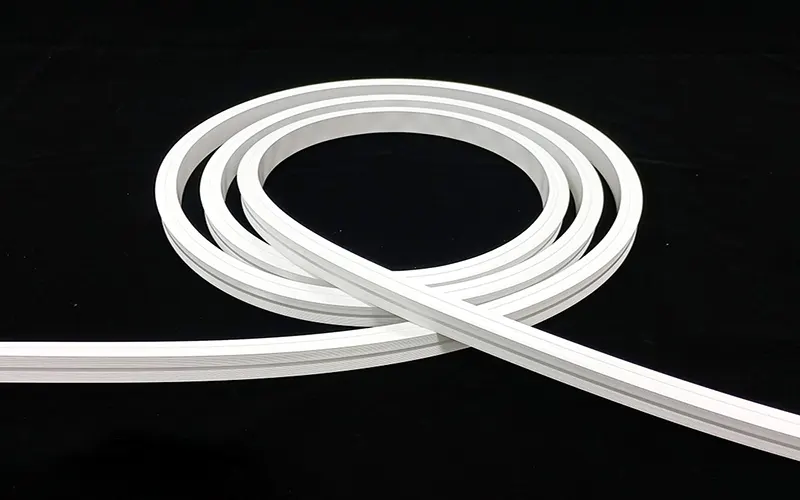
Al onze IP67-neonbuizen zijn gemaakt van siliconen. Deze gelijkmatige lichtverspreiding voorkomt het verblindingsprobleem dat vaak voorkomt bij traditionele lichtbuizen, waardoor de algehele verlichtingskwaliteit wordt verbeterd.
Door het gebruik van siliconen hebben LED-neonlampen een hogere lichtopbrengst, met name op plaatsen waar subtiele verlichting gewenst is (zoals restaurants, bars, winkels en interieurs), waardoor ze een zachtere, aangenamere lichtbeleving bieden. Bovendien worden de helderheidsverschillen tussen de verschillende LED-lichtbronnen verminderd, wat resulteert in gelijkmatigere en esthetisch aantrekkelijkere lichteffecten.
Optische eigenschappen en lichtverspreiding van siliconen
Siliconen bezitten uitstekende optische eigenschappen en blinken met name uit in lichtverspreiding. Dankzij de transparantie en de brekingsindex kan het materiaal het licht in LED-neonverlichting optimaal verspreiden. Hierdoor wordt de schittering van directe lichtstralen voorkomen en ontstaat er een zachter lichteffect.
Bovendien heeft siliconen een hoge lichtdoorlatendheid, waardoor lichtverlies effectief wordt beperkt en daarmee de energie-efficiëntie en de helderheid van de armatuur worden verbeterd.
Het lichtverspreidende effect van siliconen is veel groter dan dat van traditionele kunststof behuizingen. Dit geldt met name in omgevingen waar een nauwkeurige regeling van de lichtverdeling vereist is, aangezien siliconen het spectrum van de LED’s nauwelijks beïnvloeden.
Dit betekent dat het, of het nu gaat om wit licht, monochromatisch licht of gemengd RGB-licht, de oorspronkelijke kleurtemperatuur en kleurverzadiging zo goed mogelijk behoudt, waardoor een nauwkeurige weergave van het verlichtingsontwerpeffect wordt gegarandeerd.
Duurzaamheid en aanpasbaarheid van siliconen
Naast de uitmuntende optische prestaties bieden de fysische en chemische eigenschappen van siliconen een solide garantie voor een langdurige, stabiele werking in uiteenlopende omgevingen.
Of het nu buiten brandende zon en stortregens zijn, of ijzige kou en sneeuw: siliconen kunnen het allemaal moeiteloos aan. Het materiaal is zeer goed bestand tegen UV-straling en is daardoor goed bestand tegen vergeling en veroudering als gevolg van langdurige blootstelling aan de zon.
Dankzij de stabiele chemische structuur is het materiaal bovendien bestand tegen extreme temperaturen van -50 °C tot 200 °C, zonder dat het broos wordt of zijn eigenschappen verliest.
Uitstekende bescherming tegen intellectuele eigendom dankzij siliconen
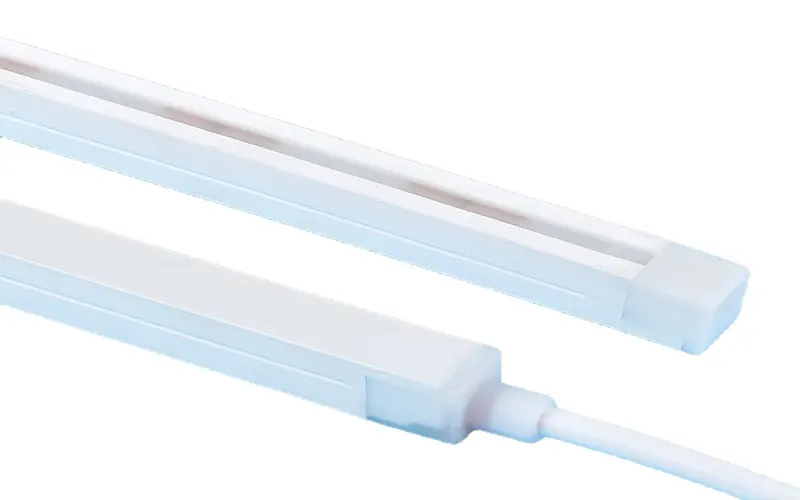
Siliconen omhulsels bieden een uitstekende afdichting en elasticiteit, waardoor ze moeiteloos voldoen aan beschermingsklasse IP67 of zelfs IP68. Dit maakt ze tot ideale inkapselingsmaterialen voor het garanderen van water- en stofdichte producten. Zie Hoe maak je LED Neon Stripverlichting voor Buiten Waterdicht?
Veilige en milieuvriendelijke siliconen
Siliconen van voedingskwaliteit zijn niet giftig, geurloos en geven geen schadelijke stoffen af. Nog belangrijker is dat hoogwaardige siliconen doorgaans voldoen aan de brandvertragingsnorm UL94 V-0, wat betekent dat ze de verspreiding van vlammen bij blootstelling aan vuur effectief kunnen voorkomen, waardoor de veiligheid van de toepassingsomgeving aanzienlijk wordt verbeterd.
Waarom worden PVC of andere kunststofmaterialen niet aanbevolen als diffusors voor LED-neonflex?
Hoewel PVC en andere kunststoffen goedkoper zijn en een prijsvoordeel bieden, hebben ze een aantal belangrijke nadelen bij toepassingen waar hoge kwaliteit en duurzaamheid vereist zijn:
- Slechte lichtuniformiteit: de lichtdoorlatendheid en -verspreiding van PVC zijn over het algemeen minder goed dan die van siliconen, wat al snel leidt tot een zichtbare korreligheid in de LED-lampjes, met als gevolg “vlekken” of “lichtkolommen” die de esthetiek aantasten.
- Gevoelig voor vergeling en veroudering: PVC-materialen vergelen en worden onder invloed van UV-straling snel broos, wat niet alleen de lichte kleur aantast, maar ook scheurtjes in het materiaal veroorzaakt en de levensduur aanzienlijk verkort.
- Onvoldoende flexibiliteit: Vooral in omgevingen met lage temperaturen wordt PVC hard en broos, waardoor het bij het buigen gemakkelijk barst, wat de toepassingsmogelijkheden bij het ontwerpen beperkt.
- Milieu- en veiligheidskwesties: Sommige PVC-materialen kunnen weekmakers bevatten, en hun vlamvertragende eigenschappen zijn over het algemeen minder goed dan die van hoogwaardige siliconen.
- Kiezen voor PVC betekent vaak een afweging maken tussen de aanschafkosten enerzijds en de lichtefficiëntie op lange termijn, de levensduur en de onderhoudskosten anderzijds.
Conclusie
De keuze voor siliconen als materiaal voor LED-neonverlichting heeft een directe invloed op de kwaliteit, duurzaamheid en veiligheid van uw verlichtingsproject. Van het bereiken van een gelijkmatige lichtopbrengst tot duurzaamheid in veeleisende omgevingen, en het waarborgen van stabiliteit en veiligheid op de lange termijn: siliconen bewijzen op alle belangrijke vlakken hun leidende positie als ideaal lichtverspreidend materiaal.
Als u op zoek bent naar hoogwaardige LED-neonverlichting Oplossingen: overweeg het gebruik van armaturen op siliconenbasis voor een gelijkmatiger, zachter en milieuvriendelijker lichtbeleving. Lees vandaag nog meer over onze LED-neonverlichting op siliconenbasis.
FAQ's
De productiekosten en de grondstofprijs van siliconen liggen over het algemeen hoger dan die van PVC. Gezien de aanzienlijke voordelen van siliconen op het gebied van weerstand tegen vergeling, veroudering, flexibiliteit en levensduur (doorgaans 2 tot 3 keer langer dan bij PVC), worden de onderhouds- en vervangingskosten op de lange termijn echter aanzienlijk verlaagd.
Ja, hoogwaardige siliconenmaterialen waaraan UV-stabilisatoren zijn toegevoegd, zijn uitstekend bestand tegen vergeling. Onder normale UV-blootstelling en weersomstandigheden buitenshuis blijft gegarandeerd gedurende 3 tot 5 jaar geen noemenswaardige vergeling optreden.
Ja, ze kunnen onder extreme weersomstandigheden worden gebruikt. Ze zijn bestand tegen een zeer breed temperatuurbereik (doorgaans -40 ℃ tot 80 ℃). Ze behouden hun flexibiliteit en worden niet broos, zowel in ijskoude als in zeer warme buitenomgevingen.
Siliconen is een niet-giftig en milieuvriendelijk materiaal dat tijdens het gebruik geen schadelijke gassen afgeeft en recyclebaar is. PVC daarentegen kan schadelijke stoffen bevatten en is niet gemakkelijk afbreekbaar, wat een belasting vormt voor het milieu. Siliconen is een geschiktere keuze die voldoet aan de moderne milieunormen.