
When purchasing high-quality, high-brightness LED light strips, our attention is typically focused on factors such as LED density, Color Rendering Index (CRI), and control systems. However, we often overlook the adhesive backing of the LED strips. In reality, the key factor determining whether your installation project remains secure, neat, and reliable over the long term is precisely that—the adhesive tape on the back of the LED strip.
Inferior adhesive tape is the primary culprit behind LED strips detaching, sagging, or even suffering from poor heat dissipation within just a few months. Not only does this waste your time, but it can also result in damage to your LED strips.
This article serves as your comprehensive guide to selecting high-quality LED strip adhesives—covering everything from tape types and key performance metrics to industry-recognized top choices—empowering you to make informed decisions and ensure that your lighting project enjoys lasting, reliable support.
What is LED Strip Tape?
LED strip light tape is a double-sided adhesive material specifically designed to secure LED strip lights to various surfaces. It is typically located on the back of the strip and is used to firmly adhere it to substrates such as aluminum channels, walls, glass, or plastic.
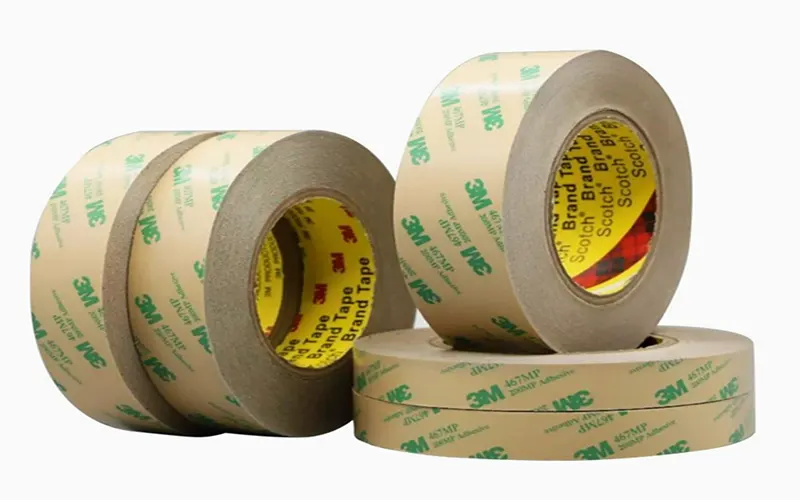
LED strip light tape boasts superior adhesion, high-temperature resistance, and durability, capable of withstanding the heat generated during long-term operation and changes in the external environment.
High-quality LED strip light tape not only simplifies the installation process but also significantly reduces subsequent maintenance costs, ensuring the strip remains securely in place for years. More details, pls read Warum kleben die LED-Leuchtbänder nicht?
What are Some Common Types of LED Strip Tape?
When installing LED strip, adhesive tape serves as more than just an adhesive material; it is also the key to ensuring the strips remain securely in place and operate reliably over the long term. The following are the most common types of LED strip adhesive tape currently available on the market, along with their key characteristics:
1. 3M Double-Sided Tape
3M is a renowned brand for high-performance adhesive tapes, enjoying the widest application within the LED lighting industry. Representative models include the 3M 300LSE, 3M 5952, and the 3M VHB series.
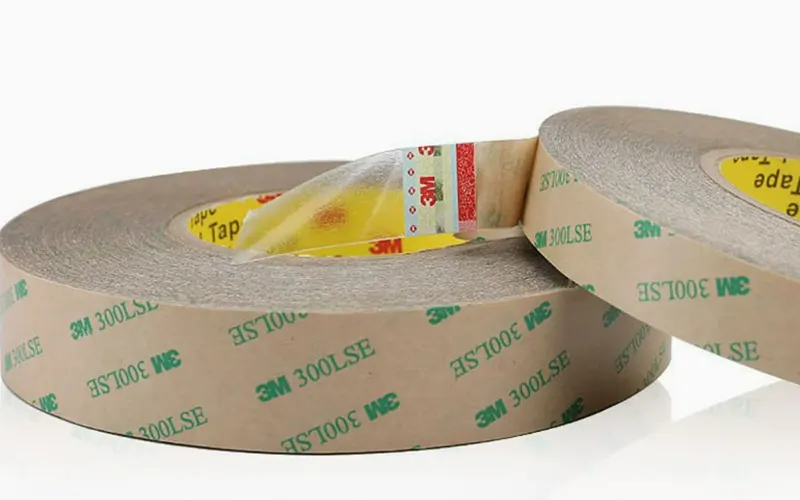
All of our LED light strips primarily utilize 3M 300LSE adhesive, enabling them to adhere firmly to a wide variety of surfaces, including aluminum profiles, glass, PVC, and acrylic.
Vorteile:
- Excellent high-temperature resistance (typically capable of withstanding temperatures above 90°C)
- Strong resistance to aging, moisture, and UV radiation
- Resists detachment after bonding, maintaining stability even after prolonged use
- Leaves minimal adhesive residue upon removal, ensuring no interference with subsequent installation
2. Nano-Trace-Free Tape
Nano tape is a new type of eco-friendly adhesive tape based on polyurethane or acrylic gel materials, characterized by its transparency, washability, and reusability.
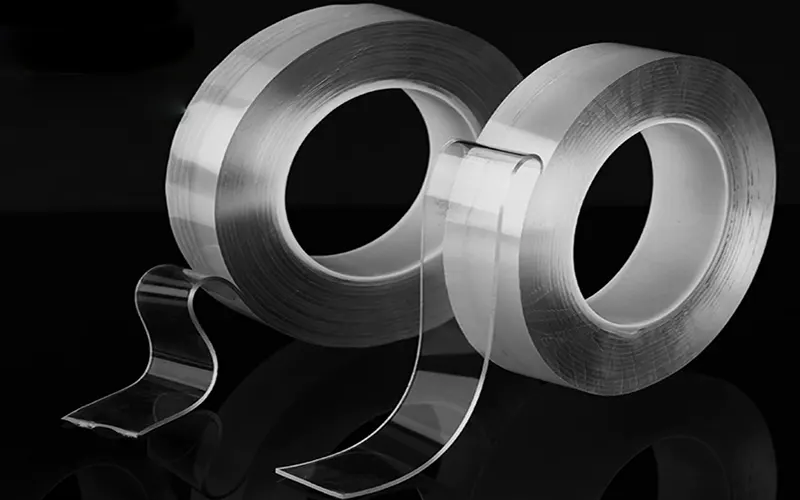
Featuring a soft surface and strong tack, this tape provides powerful adhesion when applied to smooth surfaces.
Vorteile:
- Repositionable without leaving any residue
- Easy to clean; adhesion can be restored by rinsing with water
- Highly flexible, making it suitable for mounting on curved or glass surfaces
3. Foam Double-Sided Tape
Foam tape consists of an EVA or PE foam substrate coated with a double-sided adhesive layer; its thickness typically ranges from 1 to 3 millimeters. Its primary characteristics are excellent flexibility and strong gap-filling capabilities, allowing it to maintain effective adhesion even on rough or uneven surfaces.
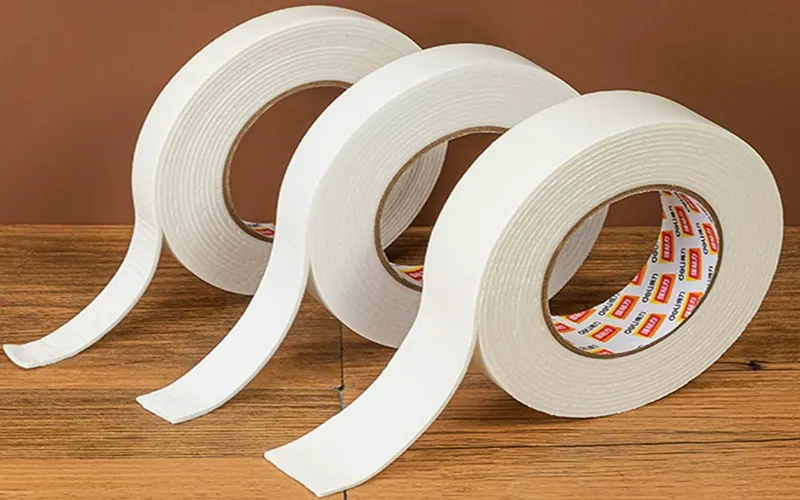
Vorteile:
- Adapts well to uneven substrates, such as wooden boards and stone walls
- Provides cushioning and shock absorption, making it suitable for environments subject to vibration or movement
- Exhibits excellent weather resistance, allowing for outdoor application
4. PET Double-Sided Tape
PET (Polyethylene Terephthalate) double-sided tape is a transparent, thin adhesive tape characterized by stable adhesion and a clean, unobtrusive appearance. Typically less than 0.1 mm in thickness, it is ideally suited for applications where discreet installation is required.
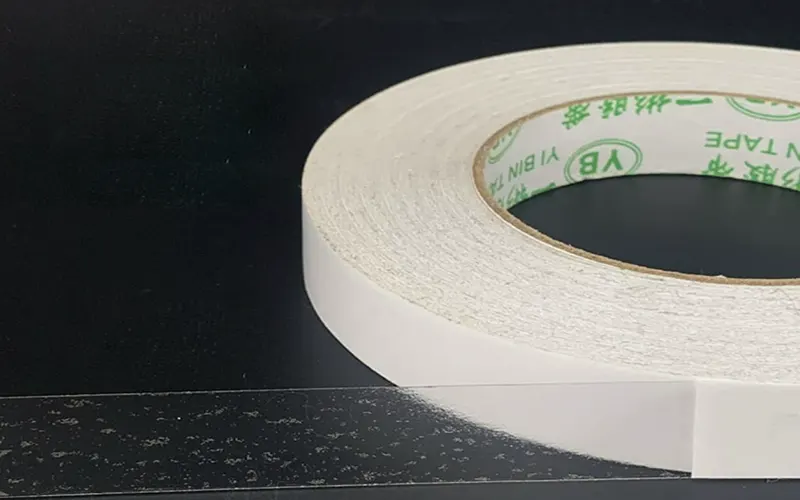
Vorteile:
- Ultra-thin design that does not compromise the aesthetics of the LED light strip
- Excellent resistance to temperature and humidity
- High transparency, suitable for use with transparent covers or for installation on the back of glass
5. High-Temperature Acrylic Tape
This type of tape is specifically designed for high-heat devices, such as LED light strips. It utilizes a modified acrylic-based adhesive, offering exceptional heat resistance and long-lasting adhesion.
Even when LED light strips operate continuously—causing their surface temperatures to rise above 80°C—the tape remains stable, neither softening nor detaching.
Vorteile:
- Remains stable even in high-temperature or high-humidity environments
- Exhibits excellent resistance to aging and oxidation
- Suitable for high-power LED strips with high heat generation
What Are the Key Characteristics of High-Quality LED Strip Adhesive Tape?
Selecting high-quality adhesive tape for LED strips depends on more than just the brand or price; more importantly, it requires an understanding of its physical properties and chemical characteristics. The following performance metrics directly determine the tape’s adhesion strength, service life, and stability across various environmental conditions.
1. Adhesion Strength
Adhesion is the primary metric for evaluating tape performance; it reflects the bonding strength between the tape and various surface materials—such as aluminum profiles, PVC, glass, or wood.
In the case of high-quality LED strip tape, it should exhibit excellent initial tack upon application while maintaining durable holding power over extended periods of use, without diminishing due to heat, humidity, or the passage of time.
2. Temperature Resistance
During operation, LED light strips continuously generate heat, with temperatures frequently reaching between 50°C and 70°C. If the adhesive tape lacks sufficient heat resistance, issues such as softening, adhesive bleed, or detachment may easily occur.
Consequently, temperature resistance is contingent upon the chemical stability of the adhesive. For high-power applications or installations within enclosed light channels, it is recommended to select acrylic or VHB tapes capable of withstanding temperatures exceeding 80°C.
3. Shear Strength
Shear strength refers to a tape’s ability to resist sliding in a direction parallel to the surface; it is typically measured in “hours” or “Newtons per square centimeter.” Tapes with high shear strength maintain stable adhesion on vertical surfaces, preventing LED strips from shifting or deforming.
4. Moisture and Aging Resistance
For LED light strips intended for long-term use, resistance to moisture and aging are critical factors influencing their lifespan. This is because environmental humidity, UV exposure, and atmospheric oxidation can all cause the adhesive tape to lose its tackiness or become brittle.
5. Thickness & Flexibility
The thickness of adhesive tape directly influences its conformability and gap-filling capabilities. Tapes of varying thicknesses are suited to different surface types and aesthetic requirements.
Flexibility, conversely, determines the tape’s ability to adhere to curved surfaces—such as cylinders or curved light channels. Highly flexible tapes conform more closely to the underside of LED strips, thereby minimizing edge lifting and air bubbles.
6. Adhesive Material Type
The adhesive material is the “core factor” influencing performance. Adhesives based on different chemical matrices exhibit significant variations in tack, temperature resistance, and aging resistance. We recommend prioritizing acrylic-based or silicone-based tapes to ensure long-term, stable performance.
How to Extend the Lifespan of LED Strip Adhesive Tape?
This is a detail that requires attention during the installation process. We can start by ensuring the installation surface remains clean. This is the most critical step; any residual dirt or debris will act as an “isolation layer” between the tape and the surface.
Apply Proper Mounting Pressure
After removing the protective film and adhering the light strip, it is essential to apply sufficient and uniform pressure. Pressure-sensitive adhesives require pressure to properly “bond” with the surface.
Curing Time
Most high-quality tapes (especially VHB) require time to achieve their ultimate bond strength. We recommend avoiding the application of any tensile force or gravitational load to the light strips during the 24 to 72 hours following installation. Allow the tape to cure fully at room temperature to reach 100% of its adhesive strength.
Use Aluminum Profiles
Always mount the LED strip in aluminum profiles or heat sinks. Aluminum profiles not only provide a smooth bonding surface, but more importantly, they quickly dissipate heat from the LEDs, reducing the PCB temperature and significantly extending the tape’s lifespan.
Avoid Overstretching the LED Strip Adhesive Tape
During installation, do not overstretch the LED strip, as this will continuously apply stress to the tape.
Waterproof and Moisture-proof Protection
If used in a humid environment, ensure that the edges of the light strip and tape are properly waterproofed to prevent moisture from penetrating the adhesive layer.
Schlussfolgerung
Choosing high-quality LED strip adhesive tape mounting tape is a critical investment to ensure the durability, professionalism, and reliability of your lighting projects. Neglecting tape quality will ultimately lead to rework and unnecessary costs. If you are looking for high-adhesion, high-temperature resistant, and cost-effective LED-Streifen mounting tape, please contact us to learn more about LED strip mounting solutions and provide more stable support for your projects.
FAQs
Direct sticking is not recommended. The tape usually sticks to surface paint or dust, not the wall itself, making it easy for the paint to peel off along with it.
This depends on the type of tape and the installation environment. High-quality acrylic tapes (such as the 3M VHB series) can maintain stable adhesion for 3-5 years or more in indoor environments.
It’s not recommended. Regular double-sided tape is mostly rubber-based, lacking sufficient temperature resistance and adhesion, which may lead to delamination with prolonged use. LED strip tape uses industrial-grade adhesives, capable of withstanding higher heat and humidity, ensuring safety and stability.
Ordinary rubber-based tapes may soften or melt above 60°C, while high-temperature acrylic tapes can withstand temperatures of 80°C or even higher, making them ideal for high-power LED strips or use in enclosed aluminum channels.
We recommend using 3M VHB series or high-temperature waterproof acrylic tape. These tapes are moisture-proof, UV-resistant, and anti-aging, maintaining stable adhesion even under conditions of intense sunlight or rain. It’s also best to use them in conjunction with LED profiles.