
La qualité de l'adhésif est cruciale pour bandes de néons LED étanches. De nombreuses personnes pensent à tort qu'une colle ordinaire suffit pour fixer et sceller les tubes néon LED. Cependant, une colle de mauvaise qualité peut entraîner des fissures et la corrosion du matériau de la bande lumineuse, voire une défaillance du joint et une infiltration d'eau, ce qui rendrait votre investissement inutile. Elle peut même entraîner une défaillance du joint et une infiltration d'eau, ce qui rendrait votre investissement inutile. Le choix d'une colle spécialisée pour les bandes lumineuses LED étanches n'est pas une réaction exagérée, mais un facteur essentiel pour garantir leur fonctionnement stable à long terme. Cet article vous guidera à travers la nécessité d'utiliser des adhésifs spécialisés pour les néons à LED, les types les plus courants. Il fournit également des instructions étape par étape sur la manière de faire le meilleur choix en fonction de l'environnement.
Pourquoi les bandes LED étanches nécessitent-elles une colle spéciale ?
Les bandes lumineuses à LED ont des exigences beaucoup plus élevées en matière de matériaux d'étanchéité que les articles ordinaires. Les adhésifs spécialisés doivent répondre aux exigences techniques fondamentales suivantes, que les adhésifs ordinaires ne peuvent pas satisfaire pour assurer l'étanchéité nécessaire :
Résistance à la température et flexibilité
Les bandes LED d'extérieur doivent résister à d'importantes fluctuations de température, allant de températures négatives à des températures élevées, ainsi qu'à des conditions météorologiques difficiles. Les adhésifs professionnels doivent posséder une grande élasticité afin d'éviter les fissures dues à la dilatation et à la contraction thermiques, qui pourraient entraîner une défaillance du joint.
Résistance aux UV et anti-jaunissement
L'adhésif spécialisé peut résister à une exposition prolongée aux rayons ultraviolets (UV) extérieurs sans se dégrader ni jaunir. Il garantit que la lumière de la bande LED ne se détériore pas et ne change pas de couleur au fil du temps.
Non corrosif
Les puces LED et les circuits imprimés sont constitués de composants de précision et de joints de soudure. De nombreux adhésifs acides ou de mauvaise qualité libèrent des substances corrosives, ce qui entraîne l'oxydation des joints de soudure et la rupture des circuits. Les adhésifs spécialisés sont généralement neutres ou non corrosifs.
Conductivité thermique
D'excellents composés d'enrobage doivent posséder un certain degré de conductivité thermique pour aider à dissiper la chaleur générée par les puces LED. Ils prolongent ainsi la durée de vie de la bande de LED.
Adhésion et stabilité accrues
L'adhésif professionnel imperméable à l'eau adhère solidement aux boîtiers en silicone, aux profilés en aluminium ou aux substrats en PVC. Empêche la bande LED de se détacher en raison des changements de température ou du vent.
Types de colle couramment utilisés pour les bandes LED étanches
Voici plusieurs types de colle utilisés pour les bandes LED étanches. Pour plus de détails, veuillez consulter Quels sont les différents types de bandes lumineuses étanches ?
Scellant silicone neutre
Le silicone à polymérisation neutre est le type de colle le plus largement recommandé pour les applications de bandes lumineuses LED étanches. Ce type d'adhésif est basé sur des polymères de siloxane et libère des substances neutres (généralement des alcools) pendant le processus de durcissement. Ces substances ne corrodent pas les matériaux.
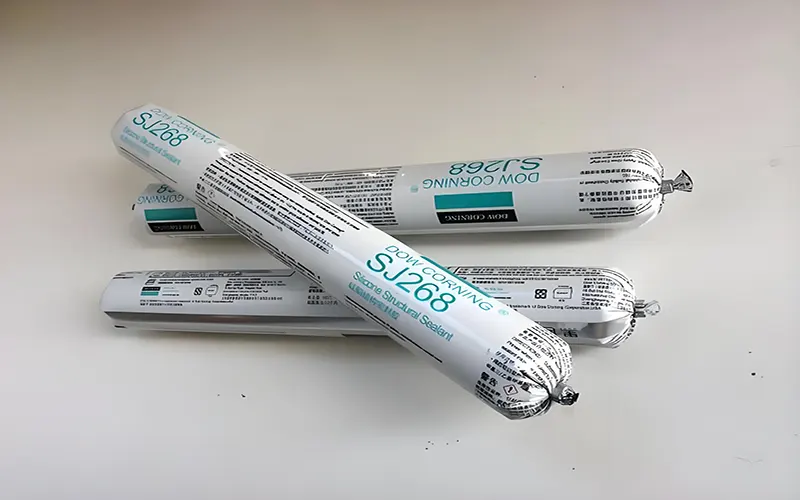
Il résiste à des températures allant de -60°C à +200°C, ce qui répond parfaitement aux besoins des applications extérieures ; il présente une excellente élasticité (l'allongement à la rupture peut atteindre 400-600%), ce qui lui permet d'absorber les variations de tension dues à la dilatation et à la contraction thermiques. Et une excellente résistance aux intempéries, conservant ses performances pendant plus de 10 ans dans des environnements ultraviolets, ozone, humides et chauds.
Le silicone à réticulation neutre est le choix préféré pour les applications de bandes LED. Ces produits ajoutent des stabilisateurs UV à la formule pour améliorer la résistance aux UV ; ils utilisent des composants à faible volatilité pour éviter la contamination des composants électroniques. Enfin, ils garantissent une faible teneur en ions et une résistance élevée à l'isolation afin d'assurer la sécurité électrique.
Des marques réputées telles que Dow Corning, Wacker et Shin-Etsu proposent des silicones d'étanchéité électronique qui, bien que plus chers, sont d'une qualité fiable et constituent le choix standard pour les projets commerciaux. Il convient de noter que le durcissement du silicone nécessite l'humidité de l'air et que le durcissement en profondeur est lent (environ 24 heures par millimètre), ce qui nécessite un temps de durcissement suffisant après l'application.
Scellant polyuréthane
Les produits d'étanchéité en polyuréthane (PU) sont connus pour leur excellente force d'adhérence et leurs propriétés mécaniques, ce qui leur permet d'être exceptionnellement performants dans les applications nécessitant une forte adhérence. L'élastomère formé après le durcissement du mastic PU combine la flexibilité du caoutchouc et la résistance du plastique. Il offre une résistance à la déchirure et à la perforation supérieure à celle du silicone. Son excellente résistance à l'usure et aux chocs le rend adapté aux lieux d'installation soumis à des contraintes mécaniques.
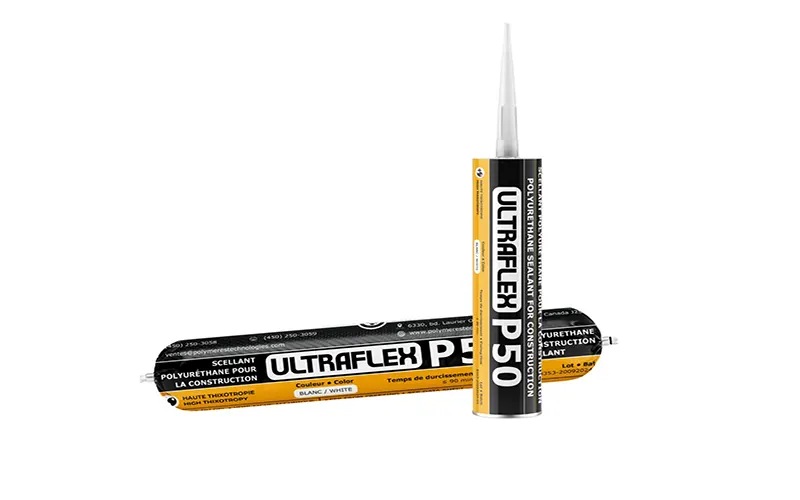
Les mastics PU présentent une excellente adhérence à une variété de matériaux, y compris les métaux, le verre, le béton, le bois et les plastiques, ce qui les rend très pratiques pour fixer les bandes LED sur divers substrats.
Les limites des produits d'étanchéité à base de polyuréthane doivent être soigneusement prises en compte. Leur résistance à la température n'est pas aussi bonne que celle du silicone, allant généralement de -40°C à +90°C, et ils se ramollissent à des températures extrêmement élevées. La résistance aux UV est plus faible ; une exposition prolongée à une forte lumière solaire peut provoquer un jaunissement, un durcissement et un poudrage. La durée de vie à l'extérieur est généralement de 3 à 5 ans, soit moins que les 8 à 10 ans du silicone de haute qualité.
Pendant le processus de durcissement ou lorsqu'ils ne sont pas complètement durcis, certains mastics PU sont sensibles à l'humidité, ce qui peut provoquer des bulles et affecter l'effet d'étanchéité. Certains mastics PU contiennent des composants isocyanates, ce qui nécessite une bonne ventilation pendant l'application pour éviter d'inhaler les vapeurs.
Colle à base de résine époxy
L'adhésif à base de résine époxy est le matériau de scellement et d'enrobage le plus solide, largement utilisé dans l'emballage électronique en raison de son excellente force d'adhérence, de ses propriétés d'isolation électrique supérieures et de sa remarquable stabilité chimique.
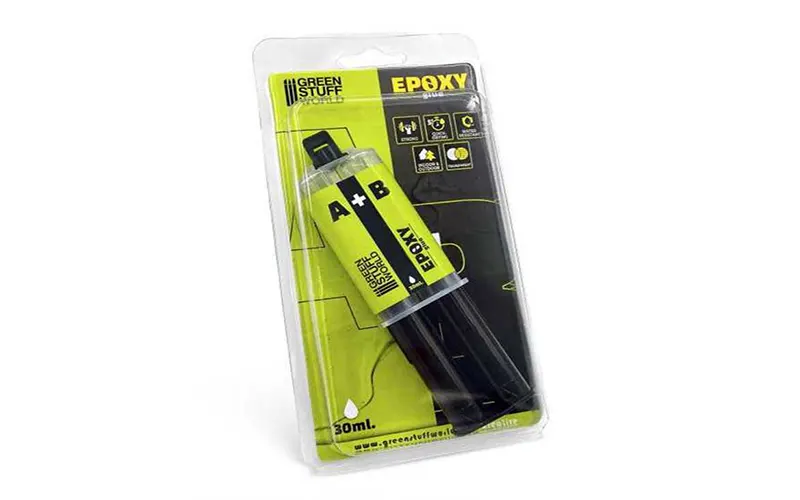
L'adhésif époxy à deux composants (résine + durcisseur) forme une structure dense de réseau réticulé après durcissement, ce qui permet d'obtenir l'étanchéité la plus fiable. La résine époxy entièrement polymérisée présente une résistance à l'isolation, une résistance chimique et une résistance aux solvants extrêmement élevées, et n'est pas affectée par l'humidité, ce qui en fait le choix privilégié pour l'éclairage sous-marin et les applications dans des environnements extrêmes.
Cependant, la résine époxy présente des limites importantes. Après durcissement, elle est complètement rigide et inélastique, incapable de résister aux variations de contraintes causées par la dilatation et la contraction thermiques, et susceptible de se fissurer au cours des cycles de température. Certaines résines époxydes jaunissent sous l'effet des rayons UV, ce qui affecte la transmission de la lumière et l'esthétique ; il convient donc de choisir des formulations résistantes aux UV.
Le rapport entre les deux composants doit être précis et le mélange doit être minutieux, faute de quoi le durcissement sera incomplet ou les performances médiocres, ce qui exige une grande compétence technique lors de l'application. Une fois durci, il est irréversible ; une fois encapsulé, il ne peut être ni démonté ni réparé, ce qui entraîne une faible maintenabilité.
Applications optimales de la résine époxy : Principalement utilisée dans le processus d'encapsulation des bandes lumineuses LED, où la bande lumineuse entière est complètement immergée dans la résine époxy et durcie, formant une protection étanche de niveau IP67-IP68. Elle convient à l'éclairage sous-marin, à l'éclairage des fontaines, à la décoration des piscines et à d'autres environnements extrêmes nécessitant une immersion prolongée dans l'eau.
Scellant acrylique
Le mastic acrylique (également connu sous le nom d'adhésif acrylique) est une option rentable, particulièrement adaptée aux applications intérieures et semi-extérieures. Ce type d'adhésif offre une bonne adhérence initiale, une élasticité modérée et une vitesse de durcissement relativement rapide (typiquement 24 heures pour le séchage de la surface).
Les adhésifs acryliques à base d'eau sont respectueux de l'environnement, non toxiques, peu odorants, faciles à travailler et les outils peuvent être nettoyés à l'eau. Ils sont relativement bon marché, coûtant environ 1/3 à 1/2 du prix des mastics silicones neutres. Ils offrent une bonne adhérence à une variété de substrats et peuvent être appliqués au pinceau ou à la brosse, ce qui permet une grande souplesse d'application.
Les performances limitées des adhésifs acryliques les rendent inadaptés aux applications extérieures exigeantes. Leur résistance à l'eau est limitée ; une immersion prolongée ou une exposition fréquente à l'humidité peut entraîner un ramollissement, un gonflement, voire un décollement. Leur résistance à la température est médiocre, allant généralement de -10°C à +60°C, ce qui les rend peu fiables en cas d'hivers froids ou d'étés chauds.
La résistance aux UV est généralement médiocre ; un vieillissement important se produit au bout de 1 à 2 ans d'exposition à l'extérieur. L'isolation électrique et la résistance chimique sont inférieures à celles des résines de silicone et d'époxy.
Applications des adhésifs acryliques : Principalement utilisées pour la fixation auxiliaire de bandes lumineuses LED d'intérieur, et non pour l'imperméabilisation et l'étanchéité primaires. Convient aux projets temporaires ou à court terme et aux éclairages décoratifs pour lesquels la durabilité n'est pas une exigence essentielle. Peut être utilisé pour coller et fixer des bandes LED d'intérieur aux murs et aux plafonds, en conjonction avec d'autres mesures d'imperméabilisation (telles que des manchons et des embouts).
Etapes détaillées pour coller les bandes LED imperméables à l'eau
Une installation correcte est la moitié de la bataille. Voici les étapes à suivre pour obtenir une étanchéité de qualité professionnelle à l'aide d'un mastic silicone.
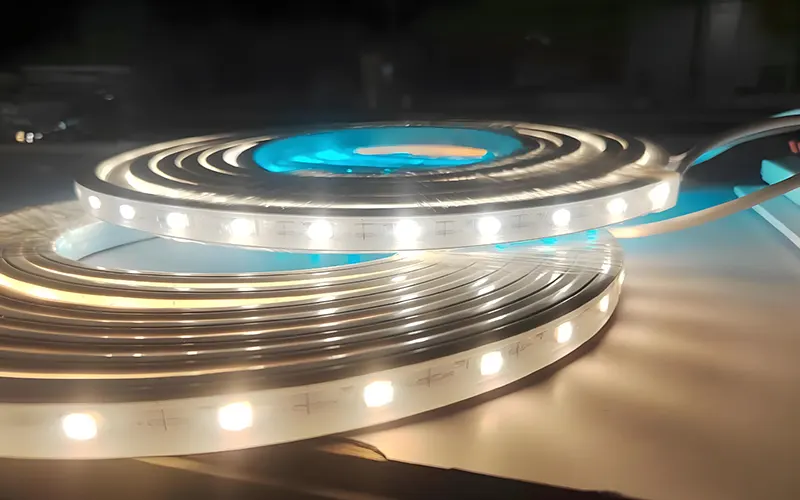
Étape 1 : Nettoyage et préparation de la surface
Il s'agit de l'étape la plus cruciale. Utilisez de l'alcool isopropylique de haute pureté ou un chiffon non tissé imbibé d'une petite quantité d'alcool pour essuyer soigneusement les surfaces de la bande de DEL qui doivent être collées et scellées (telles que les connecteurs, les embouts et les rainures de montage), en veillant à ce qu'elles soient exemptes d'huile, de poussière et d'humidité. Attendez que l'alcool s'évapore complètement.
Étape 2 : Découpe de la buse et application de l'adhésif
En fonction de la taille de la fente, couper la buse à un angle de 45 degrés. Positionner le pistolet à un angle de 45 degrés par rapport à la surface d'application et presser le pistolet à une vitesse constante pour s'assurer que le produit d'étanchéité remplit l'espace de manière continue et uniforme, couvrant complètement la zone à sceller.
Étape 3 : Mise en forme et inspection
Avant que la surface de l'adhésif ne sèche, lisser doucement la surface de l'adhésif avec une spatule ou un doigt trempé dans de l'eau savonneuse afin d'assurer un contact complet avec le substrat et un aspect lisse. En même temps, vérifiez qu'il n'y a pas d'omission ou de rupture dans l'adhésif.
Étape 4 : Attendre patiemment le durcissement
Le séchage de la surface prend généralement quelques heures, mais le durcissement complet nécessite plus de 24 heures. Pendant cette période, il convient de ne pas déplacer ou tirer la bande LED, d'assurer une bonne ventilation de l'environnement et d'éviter absolument tout contact avec l'eau.
Conclusion
Une colle de haute qualité avec de bonnes performances d'étanchéité est fondamentale pour le fonctionnement fiable des bandes LED étanches et un facteur crucial pour obtenir une protection efficace. Le choix d'une colle étanche appropriée permet non seulement d'éviter des problèmes tels que la chute des bandes LED ou l'infiltration d'eau, mais aussi d'allonger considérablement leur durée de vie.
Pour les projets commerciaux ou l'ingénierie de l'éclairage haut de gamme, il est recommandé d'utiliser un mastic silicone neutre de haute qualité, associé à des procédures d'installation professionnelles, afin de garantir une étanchéité stable et à long terme. Si vous avez besoin de Bande de néon LED de haute qualité, veuillez me contacter.
FAQ
Le temps de durcissement varie en fonction du type d'adhésif. En général, il faut environ 24 heures pour que le mastic silicone neutre durcisse complètement, tandis que la résine époxy peut prendre 48 heures ou plus. Évitez de déplacer la bande LED pendant le processus de durcissement afin d'assurer une bonne étanchéité.
Un produit d'étanchéité de haute qualité n'affecte pas la luminosité ni la dissipation de la chaleur. Toutefois, l'utilisation d'un mastic opaque ou de mauvaise qualité peut entraîner une diminution de la luminosité et une mauvaise dissipation de la chaleur, ce qui affecte la durée de vie de la bande LED. Il est donc essentiel de choisir un produit d'étanchéité transparent et à haute conductivité thermique.
Oui, notre usine produit des bandes de néons LED étanches IP67/IP68 qui sont complètement scellées en usine. Ils utilisent généralement des tubes de silicone intégrés ou un processus d'encapsulage complet, ce qui leur confère le plus haut niveau de protection.
Oui, si elles sont installées dans un environnement humide ou à l'extérieur, les barrettes de LED imperméables à l'eau avec un produit d'étanchéité sont toujours nécessaires. Le canal en aluminium n'offre qu'une protection physique et une dissipation de la chaleur, mais il ne peut pas résoudre les problèmes d'étanchéité des embouts, des points d'entrée du cordon d'alimentation et des connecteurs.