
À la tombée de la nuit, les néons colorés illuminent le ciel de la ville, créant une atmosphère unique et captivante. Toutefois, cela soulève également des questions : les néons sont-ils nocifs pour nos yeux ? Certaines personnes trouvent les néons trop brillants et éblouissants, et ressentent même une fatigue oculaire ou des vertiges après un visionnage prolongé. Ces symptômes sont-ils dus à la lumière elle-même ou à la fatigue visuelle résultant d'une mauvaise utilisation ? Les néons sont-ils nocifs pour nos yeux ?
Qu'est-ce qu'un néon? ?
Avant d'examiner la question de savoir si néons sont nocifs pour les yeux, il faut d'abord préciser quel type de source lumineuse est appelé “néon” dans la vie de tous les jours.
Aujourd'hui, le terme “néon” est devenu un terme générique qui englobe deux produits différents : les néons traditionnels à décharge et les bandes de néons flexibles à LED modernes. Leurs principes de fonctionnement sont totalement différents, de même que leur impact sur la vision et les applications.
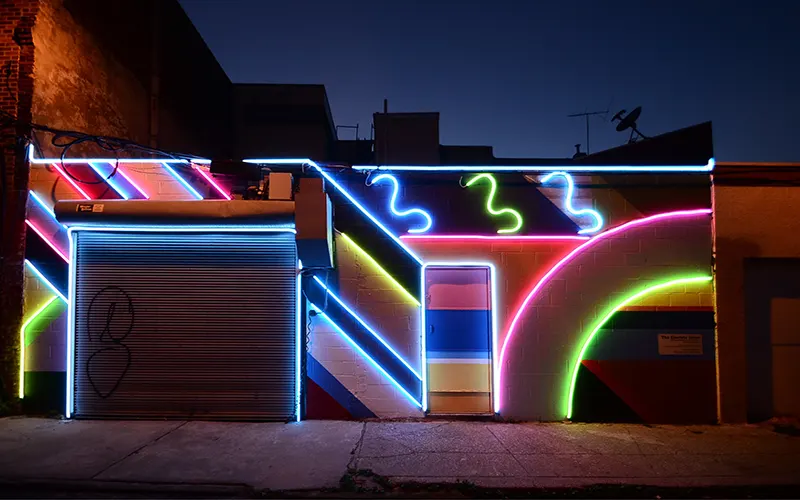
Néons traditionnels (gaz à tube de verre)
Les néons traditionnels sont une méthode d'éclairage emblématique qui est devenue populaire au début du 20e siècle et constituent un élément classique des panneaux d'affichage nocturnes.
Elles sont constituées d'un gaz inerte (néon, argon, krypton, etc.) encapsulé dans un tube de verre, avec un transformateur à haute tension (atteignant généralement plusieurs kilovolts) servant de source d'énergie pour démarrer et maintenir la décharge. Lorsque le courant passe à travers les électrodes, les atomes de gaz sont excités, produisant une décharge lumineuse qui émet de la lumière visible.
- Couleurs riches et très saturées : en particulier les néons rouges, considérés comme les plus classiques en raison de leur utilisation de gaz néon pur.
- Luminosité uniforme : La décharge de gaz se produit uniformément dans tout le tube de verre, ce qui donne une lumière douce sans points lumineux perceptibles.
- La fabrication repose sur le cintrage à la main : Les artisans doivent plier le tube de verre sous des flammes à haute température, ce qui exige un haut niveau de savoir-faire.
Avantages et inconvénients des néons traditionnels
- Avantages : Fort impact visuel, attrait artistique exceptionnel, couleurs uniques et durée de vie considérable.
- Inconvénients : Le verre est fragile, peu pratique à transporter et ne convient pas à un usage domestique. En outre, l'installation est complexe et les coûts d'entretien sont élevés.
Néons LED flexibles
Les effets de néons que l'on voit aujourd'hui dans la décoration, l'aménagement intérieur et l'éclairage extérieur sont presque tous réalisés à l'aide de bandes de néons LED flexibles. Bien qu'appelées “néons”, leur principe de fonctionnement est complètement différent.
Les tubes néon à LED utilisent des puces LED à haute luminosité comme sources lumineuses ponctuelles, en soudant les LED dans une structure de bande lumineuse linéaire. La couche extérieure est encapsulée dans du silicone ou du PVC de qualité alimentaire, formant un corps blanc laiteux semblable à un néon en verre.
Une structure spéciale de diffusion de la lumière (lumière latérale, lumière supérieure, etc.) permet d'obtenir un effet de “ligne néon” uniforme et continu.
Avantages des néons LED flexibles
- Alimentation à basse tension (5V/12V/24V) pour une sécurité accrue : Le plus souvent de 24V, elle est sans danger pour le toucher et ne présente pas de risque de haute tension.
- Grande flexibilité : Peut être plié et coupé librement, convient à la décoration intérieure.
- Lumière continue et sans tache : Le diffuseur transforme la source de lumière ponctuelle des LED en une lumière douce et linéaire.
- Grande durabilité : Étanchéité (IP67), résistance aux UV, anti-jaunissement, durée de vie de 30 000 à 50 000 heures.
Quels sont les facteurs qui contribuent à la nocivité potentielle des néons pour les yeux ?
On peut dire que l'impact de toute source lumineuse, y compris les néons, sur les yeux n'est pas absolu. Le fait de fixer une source lumineuse pendant de longues périodes provoque inévitablement un certain effet. Cependant, la majeure partie de l'impact dépend de plusieurs facteurs clés :
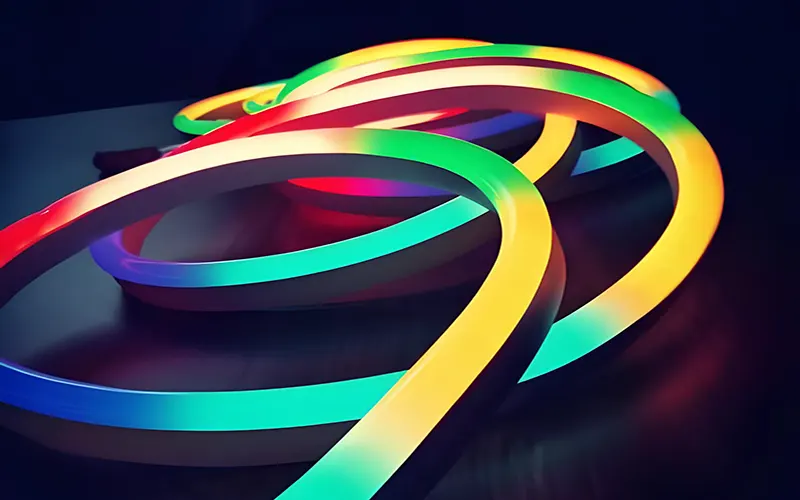
Intensité lumineuse (luminosité)
Plus la valeur en lumen (lm) d'une source lumineuse est élevée, plus la lumière est intense. Une lumière excessivement concentrée et de forte intensité (c'est-à-dire l'éblouissement) peut provoquer une gêne oculaire, entraînant une constriction excessive de la pupille, une fatigue visuelle, voire une difficulté temporaire à voir.
Observer la distance d'éclairage
Regarder directement une source lumineuse (surtout à courte distance) est beaucoup plus stimulant pour les yeux que de l'utiliser comme lumière de fond ambiante. Il est donc essentiel de maintenir une distance adéquate.
Emplacement d'installation
Si les néons sont installés directement au niveau des yeux et utilisés dans des environnements où les gens travaillent pendant de longues périodes, leur impact potentiel est plus important. S'ils sont accrochés comme décoration dans un coin ou en hauteur, l'impact est relativement plus faible.
Contraste ambiant
Dans un environnement totalement sombre, si seuls les néons sont allumés, les yeux doivent constamment s'adapter au fort contraste entre la lumière et l'obscurité, ce qui accélère la fatigue oculaire. C'est pourquoi l'éclairage ambiant reste nécessaire pour aider les yeux à s'adapter plus rapidement.
Quelles autres sources de lumière sont aussi nocives pour les yeux ?
Tout en prêtant attention aux néons, nous devrions également développer une conscience globale de la “sécurité lumineuse”. Dans notre vie quotidienne, certaines sources lumineuses peuvent présenter un risque potentiel plus élevé pour nos yeux. Vous pouvez comprendre correctement les sources lumineuses suivantes : Pour en savoir plus, lisez Quelle est la meilleure couleur de lumière pour vos yeux la nuit ?
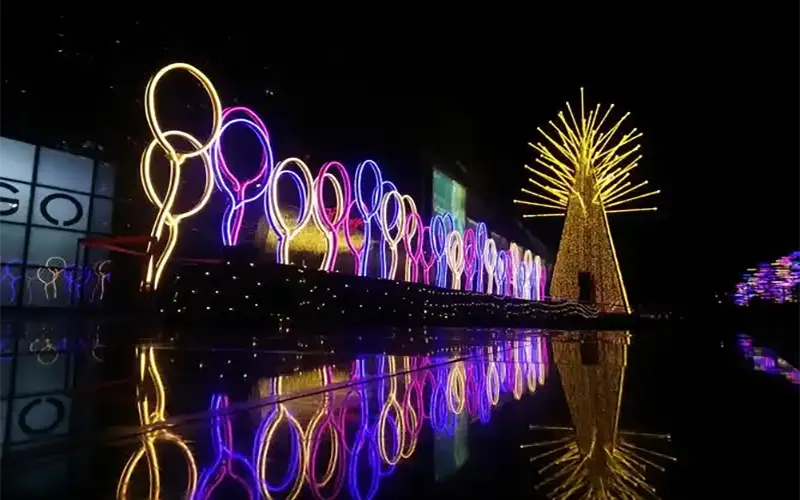
- les écrans LED (téléphones, ordinateurs) : Ce sont les sources de lumière que nous rencontrons le plus fréquemment. Elles émettent une lumière bleue à haute énergie et leur utilisation prolongée à courte distance est une cause majeure de fatigue oculaire numérique, de troubles du sommeil et de lésions rétiniennes potentielles.
- Pointeurs laser : Ce type de source lumineuse ne doit absolument pas être projeté directement dans les yeux. Son énergie très concentrée peut provoquer en un instant des brûlures permanentes de la rétine.
- Lampes UV/lumière du soleil : Le rayonnement ultraviolet est un facteur environnemental majeur à l'origine de maladies oculaires telles que la cataracte et le ptérygion.
En comparaison, le niveau de risque global des néons est relativement faible à des distances de vision normales. Nous devrions nous concentrer davantage sur la protection des yeux que sur les écrans électroniques devant lesquels nous passons des heures chaque jour.
L'effet de scintillement des néons peut-il entraîner une fatigue oculaire et des maux de tête ?
C'est possible. Nous venons de voir comment certains facteurs associés aux néons peuvent effectivement affecter nos yeux. Le scintillement est l'une des principales causes d'inconfort visuel. Notre système visuel traite inconsciemment ces fluctuations rapides de la lumière, ce qui augmente la charge sur notre accommodation.
Si vous ressentez une fatigue oculaire, une vision floue, des clignements d'yeux fréquents ou des maux de tête après avoir passé du temps dans un environnement éclairé au néon, le scintillement est probablement le coupable.
Faites particulièrement attention lorsque vous photographiez des néons avec un téléphone ou un appareil photo ; les bandes défilantes ou le scintillement sur l'écran sont des preuves directes de leurs caractéristiques de scintillement. Pour les personnes ayant des antécédents de sécheresse oculaire ou de migraines, le scintillement est un déclencheur encore plus important.
Comment éviter le scintillement des néons :
Choisissez des néons à LED dotés de pilotes d'alimentation à courant continu (DC) ou à courant constant de haute qualité. Les néons LED de haute qualité utilisent la technologie à haute fréquence ou à courant constant pour éliminer le scintillement visible et invisible, ce qui permet d'obtenir une norme sans scintillement.
Comment utiliser et installer correctement les néons pour protéger votre vue ?
Tout en profitant de la beauté et de l'ambiance des néons, nous voulons certainement protéger notre vue. Il est donc essentiel d'utiliser et d'installer correctement les néons LED.
- Évitez tout contact visuel direct avec les néons : Installez les néons dans des endroits où ils ne sont pas facilement visibles pendant de longues périodes, par exemple en hauteur sur les murs, le long des bords du plafond ou en tant que décoration d'arrière-plan.
- Utilisation comme lumière d'ambiance : Utilisez les néons principalement comme éclairage d'ambiance et non comme éclairage de travail. Évitez de les utiliser comme seule source de lumière dans une pièce ; en les combinant avec d'autres lumières d'appoint douces, vous risquez de réduire le contraste.
- Choisissez des couleurs douces et lumineuses : Évitez les couleurs trop vives ou criardes (comme le blanc extrêmement lumineux ou le bleu très saturé). Si les lumières sont dotées d'une fonction de gradation, réglez-les à un niveau de luminosité confortable.
- Choisissez des produits de haute qualité : Achetez des néons LED de haute qualité pour garantir la qualité et l'utilisation de matériaux fiables.
Conclusion
Dans des conditions de vision et d'éclairage normales, les néons n'endommagent pas les yeux de la plupart des gens sur une courte période. Leur risque est bien inférieur à celui des écrans électroniques que nous utilisons quotidiennement. Les risques réels proviennent d'une observation directe prolongée et rapprochée et de l'effet de scintillement des ampoules de mauvaise qualité.
Si vous recherchez une lumière douce et sûre, néons LED de haute qualité, veuillez contacter notre usine de fabrication de néons.
FAQ
Peu efficace. La composante de lumière bleue du spectre des néons est déjà faible ; son principal impact visuel provient de la luminosité et du scintillement potentiel. Il suffit d'éviter une exposition directe et prolongée aux yeux.
Il s'agit d'une preuve directe de la caractéristique de “scintillement” des néons. La fréquence de balayage de l'appareil photo du téléphone n'est pas synchronisée avec la fréquence de scintillement du néon, ce qui crée un phénomène connu sous le nom de “fréquence de scintillement”, qui apparaît sous forme de bandes défilantes sur l'écran.
Oui, c'est possible, mais vous devez choisir des néons d'une luminosité modérée et d'une température de couleur basse. Plus important encore, il faut éviter d'éclairer directement les yeux. Il est également recommandé d'éteindre les lumières avant de s'endormir pour éviter d'affecter la sécrétion de mélatonine et la qualité du sommeil.
Il est plus sûr de choisir des marques de néons LED avec des pilotes anti-scintillement, un indice de rendu des couleurs élevé (CRI>90) et des couvercles en silicone à lumière douce. Par exemple, NEONLEDSTRIP propose des néons anti-éblouissement à lumière douce avec une lumière uniforme et sans scintillement, adaptés à une utilisation à long terme.