
De kleurtemperatuur is cruciaal voor verlichting. Ze moet perfect passen bij de kleuren van meubels en muren. De sleutel tot succes ligt vaak in dit vaak over het hoofd geziene detail: kleurtemperatuur. Kleurtemperatuur is de “persoonlijkheid” van licht; het bepaalt stilletjes de sfeer van een ruimte, beïnvloedt onze stemming en zelfs onze werkefficiëntie. Vandaag bieden we een complete gids om je te helpen bij het maken van je keuze door LED lampen met verschillende kleurtemperaturen (3000K vs 4000K vs 5000K vs 6000K) te vergelijken.
Wat is kleurtemperatuur? Waarom is het zo belangrijk?
Kleurtemperatuur wordt gemeten in eenheden van Kelvin (K). Het is een standaard die wordt gebruikt om de kleurkenmerken van licht te beschrijven. Het verwijst niet naar de werkelijke fysieke temperatuur van de lichtbuis of gloeilamp zelf, maar wordt in plaats daarvan gedefinieerd op basis van de kleur van het licht dat door een “zwart lichaam” wordt uitgestraald wanneer het tot verschillende temperaturen wordt verwarmd.
Eenvoudig gezegd gebruiken we numerieke temperatuurwaarden om te beschrijven of licht “warm” of “koel” lijkt. Het belangrijkste punt om te begrijpen over kleurtemperatuur is het volgende: hoe lager de kleurtemperatuurwaarde, hoe warmer en geler het licht lijkt; omgekeerd, hoe hoger de waarde, hoe koeler en witter het licht lijkt.
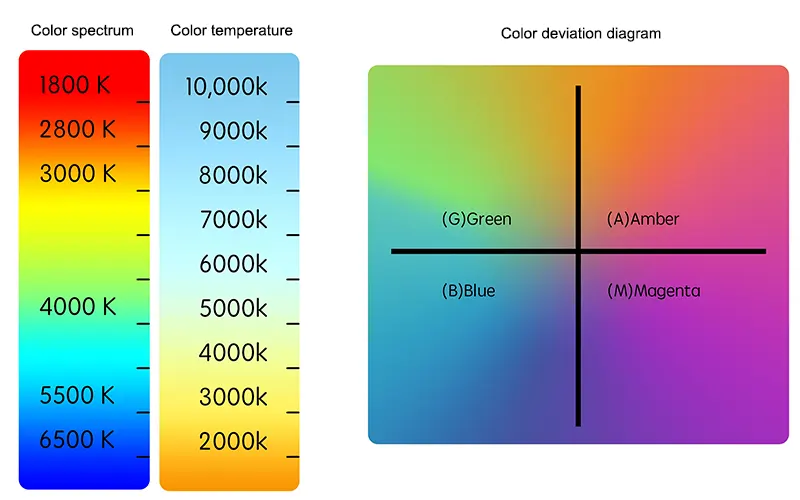
Het belang van kleurtemperatuur
- Vanuit ons perspectief creëert warme verlichting (zoals 3000K) een gezellige, comfortabele omgeving die geschikt is voor ontspanning, terwijl koele verlichting (zoals 6000K) alertheid en concentratie verbetert, waardoor het ideaal is voor werk of studie.
- Efficiëntie en stemming verbeteren: Een geschikte kleurtemperatuur kan de efficiëntie op het werk en de concentratie op school verbeteren, terwijl ook het gevoel van comfort in een thuisomgeving wordt versterkt.
- Voldoen aan uiteenlopende behoeften in verschillende omgevingen: Door de juiste kleurtemperatuur te selecteren op basis van de functie van een ruimte en de activiteiten die er plaatsvinden, kan men een optimale harmonie bereiken tussen de verlichting en de omgeving.
3000K vs 4000K vs 5000K vs 6000K: Fundamentele verschillen in kleurtemperatuur
3000K vs 4000K vs 5000K vs 6000K vertegenwoordigen de standaard, meest gebruikte kleurtemperatuur voor algemene verlichtingsdoeleinden. Om deze vier veelgebruikte kleurtemperatuurbereiken goed te begrijpen, moeten we ze in meerdere dimensies analyseren en vergelijken.
3000K
3000K warm wit licht heeft een zachte, geelachtig witte tint, vergelijkbaar met traditioneel gloeilicht of natuurlijk licht bij zonsopgang of zonsondergang. Dit licht is rijk aan rode en oranje spectrale componenten en heeft een laag gehalte aan blauw licht.
Visueel creëert 3000K een warme, ontspannen en intieme sfeer, waardoor mensen zich comfortabel en ontspannen voelen. Het is bijzonder vleiend voor huidtinten, waardoor gezichten rozer en gezonder lijken.
Het contrast onder 3000K licht is echter relatief laag, waardoor het minder geschikt is voor visuele taken die langdurige concentratie vereisen. Een typische kleurweergave-index (CRI) ligt meestal tussen 80 en 90, wat goed is voor het weergeven van warmgekleurde objecten.
4000K
Neutraal wit licht 4000K ligt in het overgangsgebied tussen warm en koel wit en wordt vaak “natuurlijk wit” genoemd. Deze kleurtemperatuur ligt dicht bij natuurlijk zonlicht om 10 uur 's ochtends of 3 uur 's middags, met een relatief evenwichtige gele en blauwe component.
4000K is de meest veelzijdige kleurtemperatuur, niet te warm om slaperigheid te veroorzaken en niet te koud om hard over te komen. Het biedt een goede visuele helderheid en gematigd comfort, met een evenwichtige kleurweergave over een breed kleurengamma.
Veel commerciële en residentiële verlichtingsruimten kiezen voor 4000K juist vanwege de neutrale eigenschappen, die een professionele maar toch toegankelijke uitstraling behouden.
5000K
Het bootst het natuurlijke zonlicht van de middag na en produceert een helder wit licht met een licht koele ondertoon. Deze kleurtemperatuur heeft een aanzienlijk verhoogde blauwlichtcomponent, waardoor het visuele systeem effectief wordt gestimuleerd en de alertheid en focus worden verbeterd.
Onder 5000K licht bereiken het visuele contrast en de helderheid een hoog niveau, waardoor het bijzonder geschikt is voor taken waarbij gedetailleerde observatie vereist is. Hij blinkt uit in het weergeven van blauw, groen en wit, maar kan warmgetinte objecten wat flets doen lijken.
De kleurweergave-index (CRI) ligt meestal tussen 85 en 95 en voldoet daarmee aan de kleurvereisten voor het meeste fijn gedetailleerde werk.
6000K
Koel wit licht vertoont een duidelijke blauwachtig-witte tint, vergelijkbaar met het licht van een bewolkte hemel of een heldere hemel na de middag. Dit is de optie met het hoogste gehalte blauw licht van de vier instellingen, die de sterkste visuele stimulatie en de hoogste helderheid biedt.
Met 6000K licht zien ruimtes er open, verfrissend en modern uit, bijzonder geschikt voor omgevingen die een hoge mate van alertheid en snelle reacties vereisen.
Langdurige blootstelling aan 6000K licht kan echter leiden tot visuele vermoeidheid en emotionele spanning, waardoor het ongeschikt is voor ruimtes waar ontspanning nodig is.
Voor ontwerpen die de nadruk leggen op koele tinten (zoals medische of technologische thema's) en productielijnverlichting, vult 6000K de sfeer van het thema perfect aan.
Een vergelijking van lichtrendement en energieverbruik bij kleurtemperaturen van 3000K vs. 4000K vs. 5000K vs. 6000K: Het is vermeldenswaard dat LED's met hetzelfde vermogen kleine verschillen vertonen in lichtrendement bij verschillende kleurtemperaturen. Over het algemeen hebben LED's in het 4000K-5000K bereik de hoogste lichtopbrengst omdat de piek van het blauwe licht dat door de LED chip zelf wordt uitgestraald binnen dit bereik valt, wat resulteert in minimaal conversieverlies.
3000K vereist meer fosforomzetting, terwijl 6000K, hoewel het een hoger gehalte aan blauw licht heeft, een iets lagere totale lichtstroom kan hebben. In praktische toepassingen ligt dit verschil ongeveer tussen 5-10%.
3000K kleurtemperatuur vs. 4000K kleurtemperatuur
3000K en 4000K zijn twee van de meest voorkomende kleurtemperaturen in huishoudelijke en commerciële verlichting. Daarom worden deze twee kleurtemperaturen vaak met elkaar vergeleken.
Hoewel het verschil tussen hen slechts 1000K is, zorgt het voor aanzienlijk verschillende visuele ervaringen en functionele effecten in praktische toepassingen. Meer details, pls check 3000K vs. 4000K licht, hoe kies je?
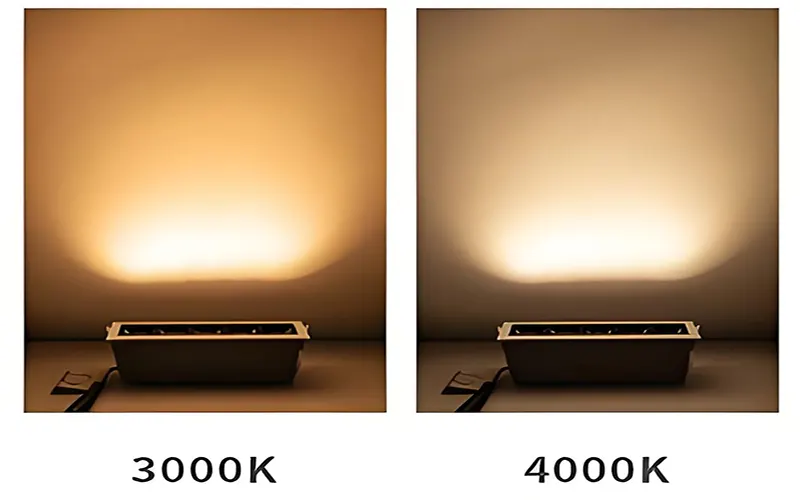
Visuele verschillen
Als je verlichting van 3000K en 4000K naast elkaar vergelijkt, zul je meteen zien dat 3000K een duidelijke geelzweem heeft en een warme gloed uitstraalt die doet denken aan traditionele gloeilampen. 4000K daarentegen is veel zuiverder wit, met aanzienlijk minder gele ondertonen. Dit verschil is vooral duidelijk tegen witte muren.
Verlichting van 3000K werpt een crèmekleurige of lichtgele tint op witte muren en creëert een zachte, gezellige sfeer; onder verlichting van 4000K daarentegen behouden witte muren een relatief neutraal wit uiterlijk en zien ze er frisser en helderder uit.
Mogelijkheden voor het creëren van sferen
3000K is de beste keuze voor het creëren van een warme en uitnodigende sfeer in huis. Het maakt woonkamers meer ontspannend, slaapkamers meer bevorderlijk voor de nachtrust en eetkamers meer uitnodigend. Interacties zijn meer ontspannen en natuurlijk onder dit licht, waardoor het geschikt is voor sociale en recreatieve gelegenheden.
4000K neigt daarentegen meer naar functionele verlichting. Het behoudt een zekere warmte zonder slaperigheid te veroorzaken, waardoor het beter presteert in omgevingen die een gematigde alertheid en werkefficiëntie vereisen.
Functionele toepasbaarheid
Voor scenario's die langdurig lezen, werken of fijne motoriek vereisen, biedt 4000K een aanzienlijk voordeel in visuele helderheid. Het biedt een beter contrast, vermindert vermoeidheid van de ogen en maakt tekst en details beter leesbaar.
Daarom kiezen kantoren, klaslokalen en bibliotheken meestal voor 4000K. Hoewel 3000K iets minder helder is, is het comfortvoordeel belangrijker in omgevingen die geen intensieve visuele taken vereisen.
Op plaatsen waar de nadruk ligt op ontspanning, zoals hotelkamers, luxe restaurants en spa's, is 3000K bijvoorbeeld de ideale keuze.
Voordelen voor kleurweergave
Onder een lichtbron van 3000K lijken warmgekleurde objecten (rood, oranje, geel) levendiger en verzadigder, wat zeer voordelig is voor het laten zien van materialen zoals hout, brons en warmgekleurde stoffen;
Koelgekleurde objecten (blauw, groen, paars) kunnen er echter dof of vervormd uitzien. 4000K biedt een evenwichtigere kleurweergave en een realistischer kleurenpalet, waardoor het een veelgebruikte keuze is voor winkels, showrooms en kunstruimtes - waarbij een zekere warmte behouden blijft zonder de echte kleuren van de koopwaar ernstig te vervormen.
5000K kleurtemperatuur vs. 6000K kleurtemperatuur
Zowel 5000K als 6000K vallen aan de hoge kant van het kleurtemperatuurspectrum en behoren tot de categorie koel wit licht. Er zijn echter duidelijke grenzen tussen beide en hun toepassingsscenario's. 6000K is een meer gebruikelijke kleurtemperatuur en wordt daarom meer gebruikt. Meer details, pls lees 3000K vs. 5000K: De juiste kleurtemperatuur voor uw behoeften kiezen
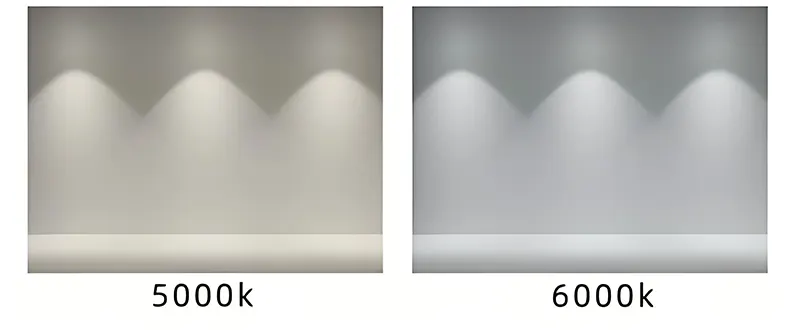
Vergelijking van lichtkleurkenmerken
5000K geeft een helder wit dat natuurlijk middagzonlicht benadert. Hoewel het lichtjes koel is, behoudt het een relatief natuurlijk visueel effect en zal het niet te hard aanvoelen bij gebruik binnenshuis.
6000K daarentegen is duidelijk blauwachtig wit. Het licht voelt koel en technologisch aan en is visueel helderder en schitterender. Op een wit oppervlak lijkt 5000K zuiver wit met een zeer lichte blauwe tint, terwijl de blauwe neiging van 6000K meer uitgesproken is.
Verschillen in visuele prestaties
5000K wordt beschouwd als een van de optimale kleurtemperaturen voor het bereiken van maximale visuele helderheid; het biedt een uitstekend contrast en herkenning van details zonder overmatige schittering te produceren.
Onder verlichting van 5000K kan het menselijk oog langere perioden werken zonder snel vermoeid te raken, waardoor het een ideale keuze is voor omgevingen die langdurige concentratie vereisen, zoals kantoren, ontwerpstudio's en medische diagnoses.
Daarentegen kan 6000K weliswaar een superieure eerste indruk van helderheid geven, maar de overmatige blauwlichtcomponent kan visuele vermoeidheid versnellen; langdurige blootstelling kan leiden tot droge ogen en hoofdpijn.
Gedifferentieerde toepassingsscenario's
5000K verlichting wordt veel gebruikt in omgevingen waar langdurig, nauwkeurig en intensief moet worden gewerkt: werkplaatsen voor elektronische assemblage, laboratoria, operatiekamers in ziekenhuizen, tandartspraktijken, ruimtes waar blauwdrukken worden bekeken en soortgelijke omgevingen.
Bovendien is 5000K erg populair in het hogere segment van de detailhandel - vooral voor het tonen van juwelen, horloges en elektronica - omdat de koopwaar hiermee zo realistisch en gedetailleerd mogelijk kan worden gepresenteerd.
6000K verlichting wordt daarentegen vaker gebruikt in omgevingen waar een gevoel van helderheid en moderniteit moet worden benadrukt: parkeerterreinen, magazijnen, beveiligingsverlichtingsinstallaties en buitensportlocaties. Het blinkt uit in omgevingen die snelle visuele reactietijden vereisen, zoals werkplaatsen voor autoreparatie en verlichting van start- en landingsbanen op luchthavens.
Kleurweergave
5000K heeft doorgaans een hogere kleurweergave-index (CRI) van 90+, waardoor verschillende kleuren nauwkeurig worden gereproduceerd, vooral neutrale en koele kleuren. Dit is cruciaal voor opdrachten waarbij kleurbeoordeling vereist is.
Hoewel 6000K ook een goede kleurweergave biedt, kan het hoge gehalte aan blauw licht warmgetinte objecten bleek of vervormd doen lijken. Sommige rode en oranje tinten kunnen hun warmte en verzadiging verliezen bij 6000K licht.
Fysiologische en psychologische effecten
Het blauwe lichtgehalte van 5000K is voldoende om alert en geconcentreerd te blijven, maar ligt binnen een relatief veilig bereik, geschikt voor dagelijks gebruik op het werk.
Het hoge gehalte blauw licht van 6000K onderdrukt de afscheiding van melatonine sterk, waardoor de alertheid wordt gemaximaliseerd. Dit is waardevol in scenario's waarbij slaperigheid moet worden tegengegaan (zoals nachtdiensten of langeafstandsritten), maar het mag niet voor langere periodes worden gebruikt omdat het de slaapkwaliteit ernstig kan verstoren.
Energie-efficiëntie en lichtverval
Er is geen significant verschil tussen de twee. Moderne LED's kunnen een hoog lichtrendement bereiken bij beide kleurtemperaturen.
Echter, 6000K, vanwege het hogere gehalte aan blauw licht, belast de LED chip iets zwaarder, wat theoretisch kan leiden tot sneller verval van het licht en kleurverschuiving bij langdurig gebruik. 5000K heeft mogelijk een licht voordeel in stabiliteit en levensduur.
Vergelijking van 3000K, 4000K, 5000K en 6000K in specifieke toepassingen
Het feitelijke toepassingsscenario is de uiteindelijke beslissende factor bij het kiezen van een kleurtemperatuur. 3000K vs 4000K vs 5000K vs 6000K zijn gangbare kleurtemperaturen; pas de optimale kleurtemperatuur aan op basis van de primaire functie van de ruimte.
| Regio/Taak | Optimaal kleurtemperatuurbereik | Kleureffect | Waarom? |
| Woonkamer/Bedkamer | 2700K - 3000K | Warm wit licht | Het creëren van een ontspannen, ongedwongen en privé sfeer. |
| Keuken/Badkamer | 3500K - 4000K | Neutraal Wit | Heeft duidelijkheid nodig voor taken (koken, make-up) met behoud van comfort. |
| Kantoor/werkkamer thuis | 4000K - 5000K | Neutraal tot koel wit licht | Verbetert focus en productiviteit, vermindert vermoeidheid. |
| Garage/Wasruimte | 5000K - 6000K | Daglicht Wit | Vereist taak- en veiligheidsverlichting met een hoge helderheid en hoge definitie. |
| Detailhandel (kleding) | 3000K - 3500K | Warm en zacht | Benadrukt de textuur en kleur van de stof, waardoor de klant er beter uitziet. |
| Juwelierswinkel/galerie | 5000K | Puur zonlicht | Ware reproductie van productkleuren en details |
Samenvatting
Dit artikel vergelijkt de verschillen tussen vier gangbare kleurtemperaturen: 3000K vs 4000K vs 5000K vs 6000K. Het wijst erop dat lagere kleurtemperaturen warmer, zachter licht produceren, geschikt voor het creëren van een ontspannen en comfortabele omgeving. Hogere kleurtemperaturen produceren daarentegen helderder, koeler licht, dat helpt bij het verbeteren van de visuele helderheid en de efficiëntie van het werk.
3000K is geschikt voor thuis en in de vrije tijd, terwijl 4000K, als neutraal licht, het meest veelzijdig is en veel wordt gebruikt in kantoren en commerciële omgevingen. 5000K en 6000K zijn meer geschikt voor plaatsen die een hoge helderheid en een hoge focus vereisen, zoals industriële, medische of buitenverlichting. In het algemeen benadrukt het artikel het kiezen van de juiste kleurtemperatuur op basis van verschillende gebruiksscenario's, in plaats van simpelweg helderder of witter licht na te streven.
Voor meer 3000K, 4000K, 5000K en 6000K LED-stripsalstublieft contact met ons opnemen.