
Con l'adozione diffusa dell'illuminazione intelligente, il protocollo DMX512 è diventato uno degli standard per il controllo delle strip LED. È frequente nell'illuminazione di palcoscenici e nell'illuminazione architetturale. Le strisce LED DMX512 sono ampiamente utilizzate per la loro elevata efficienza e stabilità. In questo articolo approfondiremo le basi del chip per strisce luminose a LED DMX512, comprese le linee guida per la selezione, i metodi di installazione e la loro importanza nei progetti su larga scala.
Che cos'è un chip per strisce LED DMX512?
In poche parole, un chip per strisce LED DMX512 è un circuito integrato in miniatura che decodifica il segnale di controllo DMX512 e lo converte in comandi di uscita per l'illuminazione. I produttori possono utilizzarlo come circuito integrato indipendente o integrarlo direttamente con i chip LED RGB o RGBW, consentendo loro di indirizzare e controllare individualmente ogni segmento o pixel LED. Per maggiori dettagli, leggere Qual è la differenza tra le strisce LED DMX 512 e SPI?
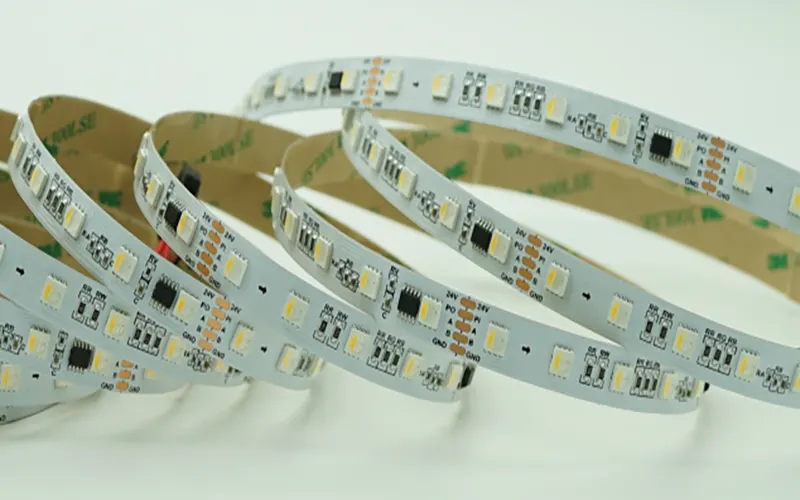
Per comprendere i chip LED, è necessario prima comprendere il DMX512. Il DMX512 è un protocollo di comunicazione digitale standard ampiamente utilizzato nel controllo dell'illuminazione professionale.
È come il “sistema nervoso” del mondo dell'illuminazione, che invia comandi a un massimo di 512 “canali” attraverso una singola linea di segnale. Ogni canale controlla un attributo, come la luminosità rossa, verde o blu di un LED.
Il chip DMX512 è il “comandante finale” di questo sistema. È saldato su una striscia di LED e ogni chip controlla uno o più LED.
Quando il controller invia il flusso di dati DMX512 lungo la striscia, ogni chip ascolta il segnale e recupera il proprio set di istruzioni in base a un indirizzo preimpostato (ad esempio, il chip “indirizzo 1” controlla i primi tre canali, corrispondenti alla luminosità R, G e B). Quindi aziona con precisione i LED per produrre il colore e l'illuminazione specificati.
Questo meccanismo “un chip, un indirizzo” consente il controllo indipendente a livello di pixel di ciascun LED.
Come scegliere il giusto chip driver per la striscia luminosa LED DMX512?
Credo che la scelta del giusto chip per strisce LED DMX512 sia fondamentale per la stabilità del progetto, la luminosità e il costo.
Indicatori chiave: Corrente di pilotaggio del chip (determina la luminosità del LED), livello della scala di grigi (determina la fluidità del colore), frequenza di aggiornamento (influisce sulla fluidità degli effetti dinamici) e lunghezza della cascata.
Corrente costante vs. tensione costante:
- Tensione costante (ad esempio, 12V/24V): Adatto per applicazioni generiche, cablaggio semplice, ma può verificarsi una caduta di tensione su lunghe distanze.
- Corrente costante (spesso utilizzata nelle strisce LED ad alta potenza): Le strisce LED a corrente costante forniscono una corrente più stabile, garantendo una luminosità uniforme per tutti i LED, ma il cablaggio e la progettazione dell'alimentatore sono più complessi.
Confronto tra UCS512C4, SM18512PS e TM512AC
La tabella seguente fornisce un confronto dettagliato delle caratteristiche principali e degli scenari applicabili di tre comuni chip driver per LED DMX512.
| Confronto tra le caratteristiche | UCS512C4 (tensione costante) | SM18512PS (tensione costante/corrente costante opzionale) | TM512AC (tensione costante/corrente costante opzionale) |
| Funzioni principali | Decodifica e driver DMX512 | Decodifica e driver DMX512 | Decodifica e driver DMX512 |
| Tipo di funzionamento | Azionamento a tensione costante (ad esempio, 12V/24V) | Tensione costante o corrente costante esterna | Tensione costante o corrente costante esterna |
| Numero di canali | 4 canali (R, G, B, W/Luminosità) | 3 canali (R, G, B) o 4 canali | 3 canali (R, G, B) o 4 canali |
| Vantaggi principali | Controllo della scala di grigi ad alta precisione, design a 4 canali e riproduzione delicata dei colori. | Ampiamente applicabile sul mercato, maturo e stabile, conveniente e con capacità di guida equilibrata. | Supporta la funzionalità di ripresa dei punti di interruzione. |
| Caratteristiche di affidabilità | Buono | Buono | Molto alto (il guasto di un chip precedente non influisce sul funzionamento dei chip successivi) |
| Capacità di collegamento a cascata | Eccellente | Eccellente | Eccellente |
| Scenari applicabili | Progetti di illuminazione architettonica e artistica di fascia medio-alta con requisiti rigorosi di qualità del colore e luminosità. | Progetti di illuminazione di ponti e paesaggi esterni su larga scala che richiedono un equilibrio tra economicità e stabilità. | Progetti che richiedono la massima affidabilità nel funzionamento del sistema (ad esempio, edifici altissimi, strisce luminose lineari a lunga distanza). |
| Livello di integrazione | Elevata integrazione; semplifica la progettazione dei circuiti | Moderato | Moderato |
Risoluzione dei problemi e manutenzione delle comuni strisce LED DMX512
Anche i sistemi di strisce LED DMX512 di alta qualità possono incontrare vari problemi durante l'uso a lungo termine. La padronanza dei metodi di risoluzione dei guasti più comuni consente di individuare e risolvere rapidamente i problemi, garantendo un funzionamento stabile del sistema.
Guasti di trasmissione del segnale
Se alcune sfere LED non si accendono o visualizzano colori anomali, occorre innanzitutto verificare che i cavi del segnale DMX siano ben collegati. I connettori, in particolare, sono soggetti a un cattivo contatto causato dall'ossidazione.
Misurare con un multimetro la tensione del segnale differenziale; in condizioni normali, dovrebbe essere di circa ±2V. Se l'attenuazione del segnale è notevole, potrebbe essere necessario un amplificatore di segnale DMX, soprattutto se la lunghezza totale del bus supera i 200 metri.
Conflitti di indirizzo
Quando gli installatori assegnano inavvertitamente lo stesso indirizzo iniziale DMX a più strisce LED, creano confusione nel controllo. Per evitare questo inconveniente, prima dell'installazione devono creare una tabella dettagliata di assegnazione degli indirizzi ed etichettare ogni segmento di striscia con il suo specifico intervallo di indirizzi.
Molti controllori DMX512 professionali sono ora dotati di una funzione di scansione degli indirizzi, in grado di rilevare automaticamente la distribuzione degli indirizzi dei dispositivi collegati al bus.
Problemi di alimentazione
La caduta di tensione è un problema particolarmente importante nelle installazioni di strisce LED a lunga distanza. Se le perle LED all'estremità più lontana mostrano un cambiamento di colore o una luminosità insufficiente, è molto probabile che ciò sia dovuto a un'eccessiva caduta di tensione.
Si consiglia di utilizzare una strategia di alimentazione a più punti; in genere, si dovrebbe stabilire un punto di iniezione dell'alimentazione ogni 5-10 metri per garantire che ogni segmento della striscia funzioni entro il suo intervallo di tensione nominale.
Scarsa dissipazione del calore
Una scarsa dissipazione del calore può innescare il meccanismo di protezione dal surriscaldamento del chip o ridurne la durata. Soprattutto quando si opera in modalità ad alta luminosità e a servizio continuo, è fondamentale garantire alle strisce luminose condizioni di dissipazione del calore adeguate.
Durante l'installazione, è necessario prevedere uno spazio di ventilazione sufficiente. Se necessario, è possibile aggiungere dissipatori di calore in alluminio o ventole di raffreddamento attive. È inoltre necessario monitorare regolarmente le temperature del sistema per evitare un funzionamento prolungato in condizioni di temperatura elevata.
Manutenzione ordinaria
Si consiglia di eseguire un'ispezione trimestrale del sistema, verificando che non vi siano terminali di cablaggio allentati, accumuli di polvere sulle strisce luminose e una tensione di alimentazione stabile.
Per i sistemi installati all'esterno, occorre prestare particolare attenzione all'integrità della guarnizione impermeabile. La creazione di registri delle apparecchiature per documentare il contenuto di ogni manutenzione e gli eventuali problemi riscontrati aiuterà a identificare tempestivamente i potenziali problemi.
Fasi di installazione delle strisce luminose DMX512 LED
L'installazione di Strisce LED DMX512 può essere piuttosto complesso. Il rispetto delle corrette fasi di installazione è fondamentale per garantire un funzionamento stabile del sistema:
Pianificazione e indirizzamento: Pianificare la disposizione delle strisce luminose e determinare l'indirizzo DMX di partenza per ogni segmento. Questa è la fase più critica.
Distribuzione degli alimentatori: Calcolare il consumo totale di energia e installare alimentatori a commutazione con capacità sufficiente nelle posizioni appropriate. Per lunghe tratte di strisce luminose, si consiglia l'iniezione di corrente in più punti per evitare cadute di tensione alle estremità.
Collegamento del sistema: Collegare i componenti nella seguente sequenza: Controllore DMX -> Amplificatore di segnale DMX (se necessario) -> Prima striscia luminosa DMX -> Striscia luminosa DMX successiva. Prestare molta attenzione alla direzione del segnale, poiché la trasmissione DMX è unidirezionale. Per maggiori dettagli, leggere A cosa serve il controller DMX512?
Cablaggio e isolamento: Per i collegamenti utilizzare cavi DMX standard o cavi di rete di alta qualità. Assicurare un isolamento adeguato in tutti i punti di cablaggio; per le installazioni all'aperto, è obbligatorio l'uso di scatole di giunzione impermeabili e di sigillante siliconico.
Accensione e test: Per prima cosa, accendere l'alimentatore, quindi accendere il controller; testare le strisce luminose segmento per segmento per verificare che rispondano come previsto.
Perché i progetti su larga scala richiedono strisce LED DMX512?
Per progetti di illuminazione complessi e su larga scala, i vantaggi del DMX512 sono impareggiabili:
Gamma di trasmissione estesa e immunità alle interferenze
I segnali DMX si basano sullo standard RS-485, che consente una trasmissione stabile su distanze di diverse centinaia di metri. Inoltre, possiedono una robusta immunità alle interferenze elettromagnetiche, garantendo così l'affidabilità in ambienti esterni e complessi.
Uno standard unificato
DMX512 è lo standard del settore, il che significa che è possibile integrare dispositivi DMX di diversi produttori, come teste mobili, wall washers e strisce LED, in un unico sistema di controllo unificato.
Flussi di dati ad alta densità e scalabilità
Sebbene un singolo Universo comprenda solo 512 canali, può essere facilmente scalato - tramite bridging con protocolli Ethernet come Art-Net o sACN - fino a comprendere centinaia o migliaia di Universi, controllando così milioni di pixel.
Sincronizzazione
Tutti i dispositivi DMX rispondono ai segnali di controllo con una precisione eccezionale, garantendo una perfetta coerenza dell'illuminazione e degli effetti visivi in strutture architettoniche o palcoscenici di grandi dimensioni.
Conclusione
Il chip DMX512 per strisce luminose a LED non solo offre prestazioni di controllo efficienti e stabili, ma supporta anche sofisticate regolazioni dell'illuminazione e operazioni di sincronizzazione. Che si tratti di applicazioni commerciali su piccola scala, di spettacoli teatrali su larga scala o di illuminazione architetturale, la tecnologia DMX512 è in grado di soddisfare una vasta gamma di requisiti. Selezionando i chip driver appropriati e padroneggiando i metodi di controllo, è possibile ottenere gli effetti di illuminazione più precisi e flessibili possibili.
Se avete domande o desiderate saperne di più su Strisce LED DMX512, non esitate a contattarci.
Domande frequenti
Sì, il chip DMX512 può controllare più strisce LED in serie. Impostando diversi numeri di canale sul controller DMX512, è possibile ottenere il controllo indipendente di più strisce LED.
Sì, un sistema di controllo DMX512 richiede in genere una codifica per ottenere effetti di illuminazione specifici. Ad esempio, utilizzando un controller Arduino, è possibile controllare programmaticamente il colore, la luminosità e gli effetti della striscia LED. Inoltre, possiamo utilizzare il software di controllo DMX512 professionale per scrivere e gestire il codice di controllo.
La distanza di trasmissione di un segnale DMX512 è in genere compresa tra 100 e 150 metri, a seconda del tipo di cavo utilizzato e delle capacità anti-interferenza del chip.
Non lo raccomandiamo! Anche se teoricamente possibile, nelle applicazioni pratiche di ingegneria. Le linee di segnale DMX (dati) e le linee di alimentazione (elettricità) devono essere separate. Per la trasmissione dei segnali DMX si consiglia di utilizzare cavi schermati a doppini intrecciati dedicati.
In genere non si tratta di un problema del chip, ma di un classico caso di “caduta di tensione”. Quando la corrente scorre attraverso una lunga striscia di LED, la resistenza del cavo consuma tensione. Più la striscia è lunga e più è lontana dalla fonte di alimentazione, più la tensione si abbassa, con conseguente riduzione della luminosità dei LED all'estremità della striscia.