
Have you ever replaced an old light bulb with a new one, or switched to LED lights, only to find that the room still feels too dim or too bright? Many people, when buying light bulbs, habitually only look at the “wattage,” believing that a higher wattage means brighter light. However, this is an outdated misconception. In the world of modern lighting, lumens are the gold standard for measuring brightness. If you’re renovating, remodeling, or simply want to replace the lights in your home, but don’t know “how many lumens I need” to properly illuminate your space, then you’ve come to the right place.
How to Calculate the Lumens Needed for a Room?
To make it easier to understand, we’ll provide a general formula for calculating lumens. This formula combines room size and purpose to give you a scientific starting point.
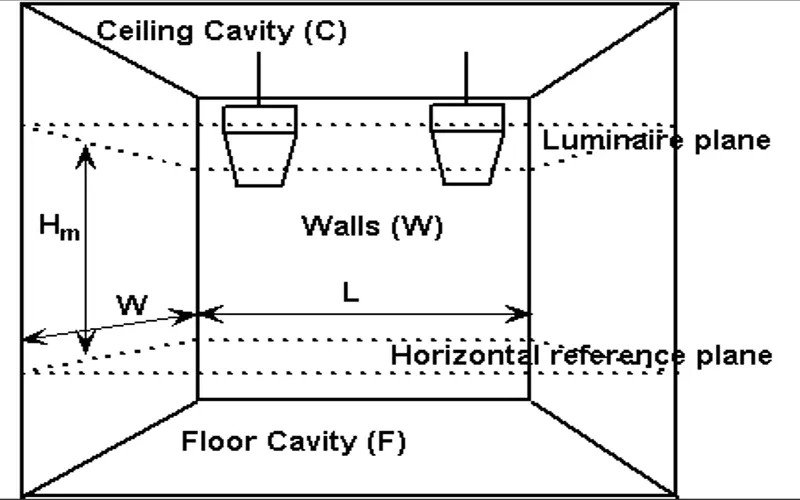
How to measure room area (square feet or square meters). The first step is to get the basic dimensions of your room.
Square or rectangular rooms: Measure the length and width of the room with a tape measure.
- Area (square feet) = Length (feet) x Width (feet)
- Area (square meters) = Length (meters) x Width (meters)
For irregularly shaped rooms: Try dividing the room into several rectangles, calculate the area of each rectangle separately, and then add them together.
If you want a quick estimate, you can simply round the length and width of the room to the nearest whole foot or meter.
Determine the target illuminance (lux) required for different purposes.
The need for light intensity varies greatly depending on the activity. Below are the recommended target illuminance levels for different functional areas (surfaces) (according to the International Commission on Illumination C.I.E. standards):
| Room/Area | Activity Type | Recommended Illuminance (Lux) |
| Entrance/Hallway | Passage, sense of direction | 100-200 |
| Bedroom | Rest, general activities | 150-300 |
| Living room | Socializing, watching TV | 150-300 |
| Restaurant/Dining Table | Dining, gatherings | 200-400 |
| Kitchen work area | Preparing food, chopping vegetables | 400-800 |
| Bathroom | Washing, grooming, and applying makeup | 300-600 |
| Study/Office | Reading, computer work | 500-1000 |
How to Calculate Lumens? (Small room vs. large space)
Above, we discussed in detail the importance of lumens and the formula for calculating them. Now let’s put the formula into practice: Room area (square meters) x Target lumens/square meter = Total lumens required.
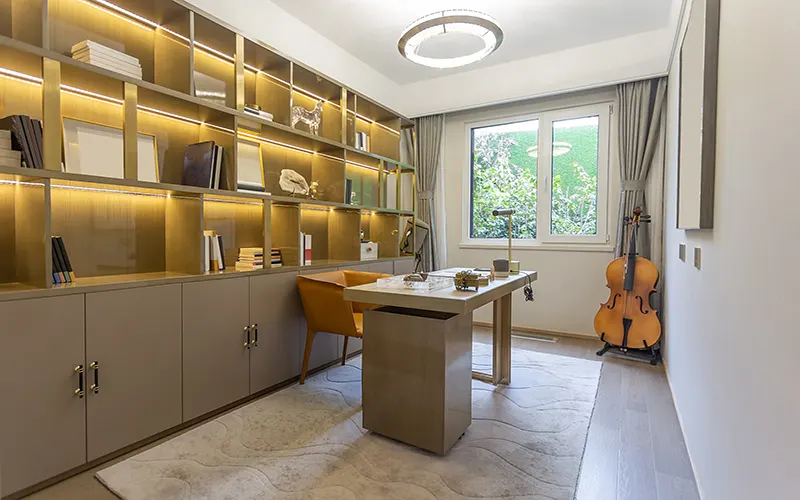
Small Study Room (Task Lighting)
Room Dimensions: 3 meters x 3 meters
Area: 9 square meters
Application: A study room requires clear visibility and falls under the category of task lighting. We will use an average value of 400 lumens/square meter.
Calculation: 9 square meters x 400 lumens/square meter = 3600 lumens
Conclusion: This study room requires approximately 3600 lumens of light in total.
Large Living Room (Ambient Lighting)
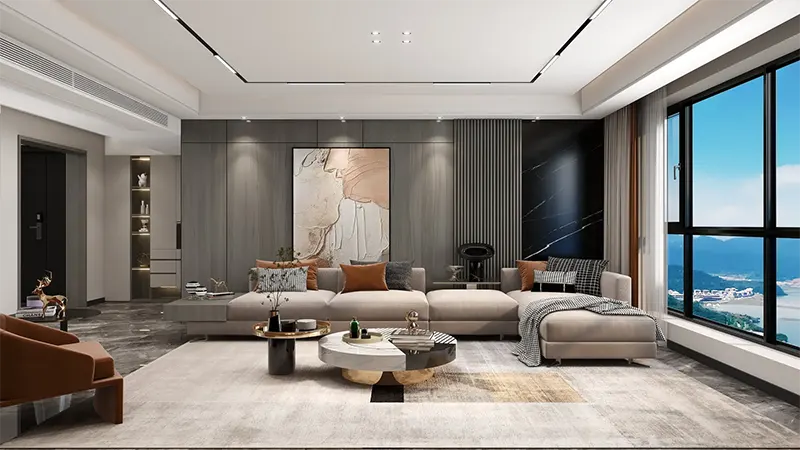
Room dimensions: 5 meters x 6 meters
Area: 30 square meters
Purpose: The living room is primarily used for relaxation and entertaining guests, requiring comfortable ambient lighting. We will use 150 lumens/square meter.
Calculation: 30 square meters x 150 lumens/square meter = 4500 lumens
Conclusion: This living room requires approximately 4500 lumens of ambient light in total. Please note that this is typically provided by multiple light sources (such as a main light, spotlights, and floor lamps).
Understanding the Lumens of Various Lighting Fixtures is Necessary
After calculating the total lumens required, the differences in luminous efficacy between different types of light fixtures must also be considered. Not all light sources have the same brightness distribution.
Ceiling Light / Pendant Light
- Provides primary ambient lighting.
- Offers wide light distribution, suitable for living rooms, bedrooms, and other areas.
- It is recommended to choose LED lights with high lumen output and a high color rendering index (CRI ≥ 80).
Downlight / Spotlight
- Used for accent lighting.
- Can be used to highlight wall decorations, display cases, etc.
- Each downlight typically has a lumen output between 400 and 800 lumens; the total brightness is calculated based on the number of downlights.
LED Strip Light
- Suitable for decorative lighting in ceilings, cabinets, under stairs, etc.
- Although the lumen output per meter is relatively low (generally 500–1000 lm/m), it provides uniform linear lighting.
- Can be used in conjunction with main lights to enhance the overall aesthetic. More, pls check COB LED Strip Lights Manufacturer: Lighting Solution
Table Lamp
- This falls under task lighting.
- A lumen output between 400 and 800 is recommended, providing soft, non-glaring light.
How to Choose the Right Lighting fixtures and light sources based on lumens?
Check the product packaging: Look directly for the “lumen” or “lm” value. Current regulations require manufacturers to clearly indicate this on the packaging.
Distribute light sources: Don’t try to illuminate an entire room with a single ultra-high lumen ceiling light. Instead, choose multiple light sources. For example, a ceiling light providing basic ambient light (approximately 2000 lumens), supplemented by a desk lamp (800 lumens) and wall spotlights (several 500-lumen spotlights), will collectively meet the total requirement, resulting in softer and more layered lighting.
Utilize dimming functions: If you can’t determine a precise lumen number, choosing dimmable fixtures and compatible bulbs is the perfect solution. This allows you to seamlessly adjust the brightness according to different times of day and moods.
Consider the fixture design: Fixtures with lampshades will absorb and diffuse some of the light, thus reducing the effective lumen output. If you choose a dark or opaque lampshade, you may need to appropriately increase the lumen output of the light source to compensate.
Conclusion
Understanding “how many lumen a space needs” is the first step in creating the ideal lighting environment. Through scientific calculations and a reasonable combination of lighting types and brightness distribution, you can ensure that every room is adequately lit. The correct lumen configuration not only makes your home look more beautiful and layered, but also genuinely improves your quality of life and protects your eyesight.
FAQs
For situations with special visual needs (such as reading small print), it is recommended to increase the calculated lumen value by 20-30%. Ensure sufficient brightness and that the light is glare-free and shadow-free.
Generally, an LED light bulb with 800–1000 lumens is equivalent in brightness to a traditional 60-watt incandescent bulb.
To illuminate a larger space, it is recommended to combine multiple light fixtures to achieve a more even brightness effect.
Not necessarily. It depends on your lighting plan for the space. Higher lumens mean brighter light, but brighter isn’t always more comfortable. Some areas require lower lumen levels.
Wattage (Watts) represents power consumption, while lumens represent brightness output. Traditional incandescent bulbs have low brightness and high power consumption, while LED lights provide higher lumen values at lower wattages, resulting in brighter light and greater energy efficiency.
LED strip lights are usually specified in “lumens per meter” (e.g., 800 lm/m). The calculation method is: strip length (meters) × lumens per meter = total lumens. For example: 5 meters × 800 lm/m = 4000 lumens. Adjust the number of LED strips or the brightness level as needed.