
Step into any supermarket or butcher shop, and you will notice a common feature: fresh meat takes on an enticing, rosy hue under specialized lighting—a visual effect created by LED strip lights designed specifically for meat displays. In today’s highly competitive retail landscape, the visual presentation of merchandise directly impacts sales performance.
When making purchases, consumers naturally gravitate toward ingredients that appear fresh and vibrant. However, not all lighting solutions can achieve this effect; selecting the wrong lighting not only fails to boost sales but can actually make fresh meat look dull and lackluster. So, what exactly are specialised LED strip lights for meat displays, and how can you make the best choice?
What Are Meat-Specific LED Strip Lights?
First, it’s important to understand that not all LED light strips are suitable for meat lighting. Dedicated LED strip lights for meat are lighting products specifically designed for fresh meat displays cases, deli cases, and refrigerated cases.
Unlike ordinary lighting, these LED light strips utilize specific spectral optimization technology. By precisely controlling the ratio of red to white light, they make the meat appear more vibrant and appealing.
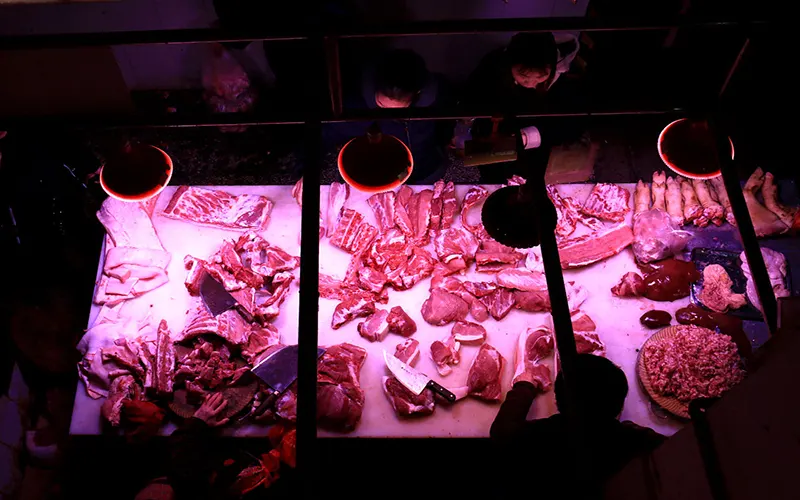
Features of the meat-specific LED strip:
- Enhanced red spectrum (620–660nm): Highlights the natural red color of meat;
- Low blue light ratio: Prevents meat from appearing grayish or cool-toned;
- High color rendering index (CRI≥90): Faithfully reproduces the texture and color of meat; More details, pls read Is 95 CRI Good for LED Strip Lights?
- Energy-saving and waterproof design: Suitable for freezers and high-humidity environments.
This meat-specific light strip not only improves visual appeal but also slows down oxidation and discoloration, increasing customers’ desire to purchase.
Why are Ordinary LED Strip lights Unsuitable for Meat Displays?
In fact, very few people use ordinary fluorescent lights or old-fashioned LED strips to illuminate meat counters. It’s a common but costly mistake in the retail industry. The reasons are:
Low Color Rendering Index (CRI)
Ordinary lighting typically has a poor CRI (CRI < 80), failing to accurately reproduce the colors of objects.
This causes meat to appear distorted, grayish, yellowish, or lifeless, directly conveying the false message of “not fresh” to customers. Therefore, it’s best to choose LED light strips with a CRI of 90 or higher.
Excessive Heat
Traditional lighting fixtures—such as halogen or metal halide lamps—emit significant amounts of heat. Within enclosed display cases, this heat elevates the local ambient temperature, accelerating surface oxidation, dehydration, and bacterial proliferation in the meat. Consequently, this tangibly shortens the meat’s shelf life and increases spoilage rates.
Inappropriate Spectrum and Color Temperature
The color temperature of standard lighting may be excessively high (emitting a cool white light), or its spectrum may lack the red light components necessary to enhance the natural color of meat. This causes lean meat to appear dull and lackluster, while fat takes on a murky, unappealing look—thereby failing to stimulate customers’ desire to purchase.
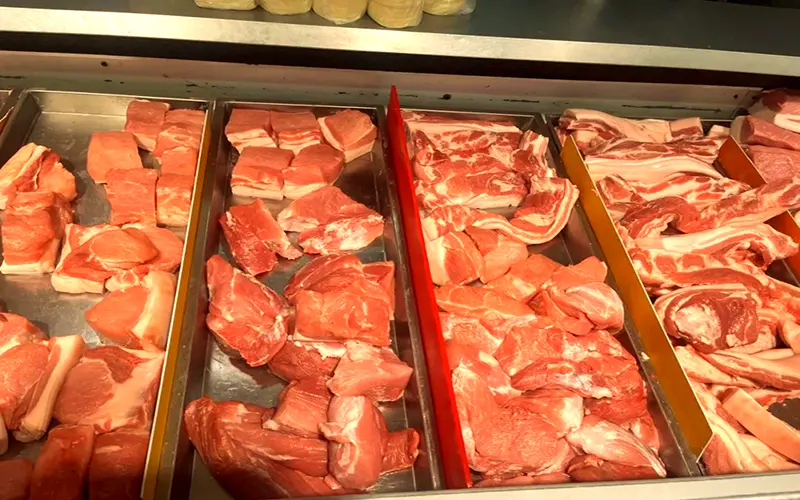
What is the Ideal Color Temperature for LED Strip Lights for Meat?
Color temperature, measured in Kelvin (K), is a key parameter determining the “feeling” of light. Choosing the wrong color temperature for LED strip displays of meat can be counterproductive.
Recommended range: 2700K – 4000K
- 2700K Warm White Light: Creates a warm and inviting atmosphere, especially enhancing the expressiveness of reds and yellows. It makes lean meat appear more tender and juicy, making it ideal for displaying packaged red meats (such as beef and lamb), greatly stimulating appetite.
- 4000K Neutral White Light: Provides a more natural and crisp light, showcasing the “true color” of meat. It makes fatty areas appear whiter and cleaner, resulting in a bright and clear overall visual effect. Suitable for poultry (chicken, duck) or meats where a more realistic presentation is desired.
Avoid choosing cool white light above 5000K, as it will make meat appear bluish or purplish, like under surgical lights, giving a cold and stale impression.
How to Choose the Right LED Strip Lights for Meat Displays?
When selecting specialized LED light strips for meat displays, it is essential to evaluate your options based on the following specific criteria. We recommend focusing on the following key aspects:
- Color Rendering Index (CRI) ≥ 90: High CRI light strips more accurately reproduce the true colors of meat, making reds richer and whites cleaner.
- Spectral Matching: High-quality light strips usually have spectral curves specifically formulated for “fresh red meat.” It is recommended to check the spectral test report provided by the manufacturer.
- Waterproof Rating (IP65 and above): Refrigerators and refrigerated display cases are humid environments; therefore, choose light strips with waterproof silicone encapsulation or anti-fog design.
- Low Voltage and High Efficiency: Utilizing 12V or 24V low-voltage power supply ensures safety and reduces energy consumption.
- Brand and Warranty: Choosing a brand with professional experience in fresh food lighting typically results in more stable color consistency and a longer lifespan (≥ 30,000 hours).
Are LED Strip Lights Prone to Failure in Freezers?
Most customers have this question, but it’s a common misconception. The truth is, high-quality, high IP-rated professional LED strip lights are perfectly safe to operate in freezers, and are even more durable than in high-temperature environments.
Low temperature isn’t a problem: The lifespan of LED chips is actually extended at lower temperatures. The low temperature environment provided by a freezer helps dissipate heat and slows down light decay.
Moisture is the challenge: The main cause of strip light failure is condensation and moisture intrusion. Therefore, as long as you choose strip lights with an IP65 or higher protection rating (moisture-proof and drip-proof), their reliability in freezers will be very high.
Installation Tips for LED Strip Lights for Meat Displays
- Optimal Installation Location: Typically located at the top front of the meat display case (closest to the customer).
- Key Illumination Angle: The light should shine downwards at a 30-45 degree angle onto the meat. This angle maximizes the highlighting of the meat’s texture and three-dimensionality while reducing glare from packaging and avoiding direct light into the customer’s eyes.
- Ensure Uniform Lighting: Calculate the number and spacing of the light strips to ensure uniform lighting throughout the display area, without noticeable alternations of light and shadow or dark areas.
- Use Aluminum Diffusers: Diffusers and off-white diffusers soften the light and enhance the overall aesthetic.
Conclusion
Special LED strip lights for meat displays are an indispensable professional tool in the modern fresh food retail industry. Utilizing scientific spectral technology, they overcome the various shortcomings of traditional lighting in meat display, translating “visual freshness” into tangible sales and reducing waste. This upgrade requires minimal investment and offers high returns, making it a key step in enhancing your store’s competitiveness.
For more LED strip light series, please contact us.
FAQs
Yes, they can make meat look fresher and more appealing, effectively stimulating purchasing desire.
No. High-quality LED light strips feature a wide temperature range design, allowing for instant startup even in the low temperatures of a freezer, without the flickering or delays seen with traditional fluorescent lights.
No. Professional LEDs are cold light sources, generating almost no heat. They are also specially treated to filter harmful spectra, preserving meat quality and extending its display life better than traditional lighting.
It is recommended to use 24V meat display LED strips. A 24V system has less voltage drop over long distances, ensuring consistent lighting brightness at both ends of the long display case, preventing uneven brightness and providing a more uniform and professional display effect.
Due to the environment of refrigerated or frozen display cases, which involve low temperatures, high humidity, and condensation risks, the IP protection rating of meat display LED light strips must be at least IP65.